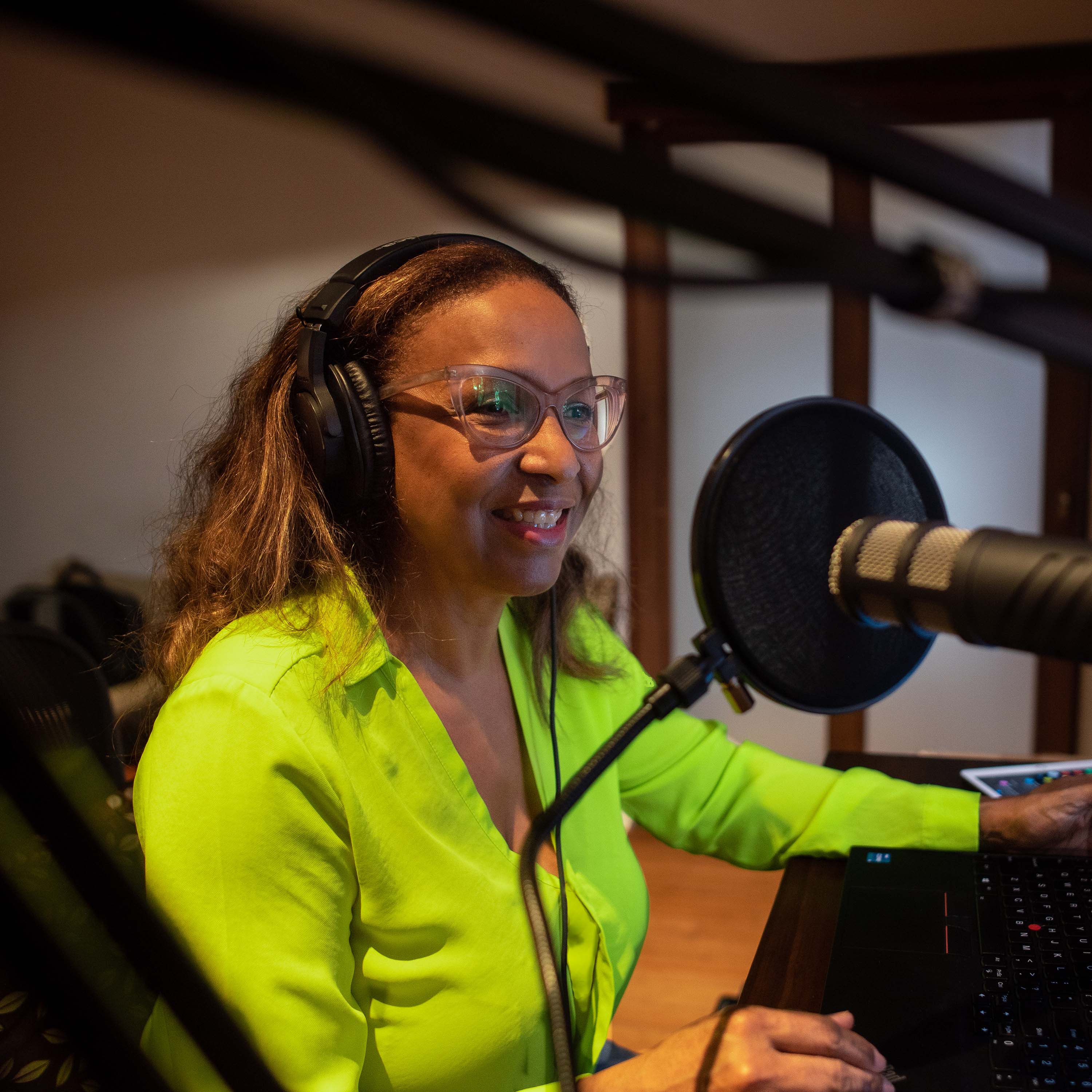
Speaker 0 00:00:00 On this episode of C on 180, I'll be chatting with Crystal Tomlinson, an inspirational, influential voice that has gone the distance in managing work life balance. We're moving beyond the borders. Be bold. Take risks, lead by example. Believe in your power. Say what you feel mean what you say. Hi, I'm Leslie Ann Cion, host of the new podcast series. See on 180. Join me at Cion 180 on this journey of discovery and advancement.
Speaker 2 00:00:53 Searching for that ideal house or rental property with a picture perfect view of the ocean or lush green hills and breeze that gently caresses your face. Century 21, Grenada helps our clients to go beyond the search to living at Century 21. Our agents understand that a home isn't just walls and a roof, but a sacred, inspiring place where you learn, laugh, play, and create. Contact us today at C 21 grenada.com or give us a call at (473) 440-5227. Go Beyond with Century 21.
Speaker 0 00:01:34 Hello my friends, and welcome again to Cion 180. I am your host, Leslie Ann Cion. On our podcast series, we feature Caribbean voices from around the world who are making real differences in their areas of influence. I invite you to check out my
[email protected], or visit your favorite podcast streaming sites for current episodes as well as past shows. You can also visit my Facebook or Instagram page for weekly updates, tidbits, advice, and interactions with me, your host and fellow listeners. We are now into season three of Cion one 18, and we have brought you voices of trauma and triumph discussing a diverse range of topics from healthcare to finances, from banking to leadership, from motivational to mental health. Today we'll be discussing lifestyle and personal productivity, and we have one awesome dynamo from the land of wood and water, a daughter of Jamaica, crystal Tomlinson, who is what I describe as a personal development evolutionary.
Speaker 0 00:02:50 Have we moved from a conference stage to a company retreat. She is skilled at customizing her presentations to ensure impact. She is an effective communicator, having moved from a troubled teenage childhood to becoming a three time world university debater and the only female in the Caribbean to cop the title of public speaking champion at the World University's Debate Championship. Her journey to self-discovery is the foundation of her presentations, demonstrating the power to choose and un Jew who we want to become and show up with courage no matter our background. She's an author of the book, kill Fair, the Art of Courageous Living and Bravely shares her experiences killing the three big social fairs of this generation, the fear of criticism, the fear of failure, the fair of loneliness. She is the founder and leads strategists for the Success Farm Life Academy and has curated a vibrant community of gold getters in a group coaching program, the Harvest Hub, and continues to train hundreds of students to master the art of public speaking through her speak with Courage online course. Her philosophy is what I adore. I remain under construction. I will not be too proud to review, repurpose, and reposition Welcome Crystal to see on 180.
Speaker 3 00:04:25 Thank you. Thank you Leslie, and so much for having me as a guest. It is my pleasure and I'm very excited to connect with and share with your audience.
Speaker 0 00:04:35 Excellent. I am excited myself and I want to begin with that philosophical statement. I remain under construction. I will not be too proud to review, repurpose, and reposition. In other words, we are a work in continuing progress. Tell us all to our audience what this means.
Speaker 3 00:04:54 So I came up with that as my, my mantra, my life statement when I got to about age 23, and I realized that so many points in my life I thought I knew and I knew how things were gonna happen, and the more I knew it's the harder it was for me to adapt, to be flexible, and to accept that things have changed or are not going in the direction that I would've planned for them to go. Yes, longer I spend resisting what is the longer I spend insisting that this is what it is and I know for sure that this is how it's going to end. It creates a barrier between me and the opportunities. It creates a barrier between me and the present moment that has its own gifts to give me, and it slows me down in the process of life because life requires change.
Speaker 3 00:05:42 It requires the repositioning, it requires the review and the repurposing. So I'm not living my best life by being resistant stub on and insistent that what I had in my mind as the vision has to always be what is my reality. So it has helped me to deal with loss, it has helped me to deal with disappointment, with failure, with uncertainty, fear. And I've not found reason to change it in the last nine, almost 10 years now. But I'm still open to repurposing even my life statement. But for now, um, it really does touch me in the right, right spot depending on the season that I'm in.
Speaker 0 00:06:24 Yes, I think it is very relevant, um, because sometimes there is this reluctance to to keep moving, to keep improving, to keep progressing. We remain in this neutral zone through fair, but we don't want to push forward on certain things. So having that underpinning of the philosophy in one's mindset, I think is important for us to overcome a lot of challenges today, both personal and professional.
Speaker 3 00:06:50 Absolutely, absolutely. And I can share a, a very real example, when I was changing, um, careers, one of the big assets I had was the mental fortitude to not be worried about what I was losing and to focus on what I was gaining and how I was gonna grow. So I moved from, uh, uh, an academic background into a media and communications background and into a corporate management background and then into entrepreneurship. And for each of those stages, the next stage is new. The next stage is scary. The next stage is risk taking. And for all of those stages, I'm under 30. I'm young, I, I don't have all the experience that I need to feel confident, but just being sure that I can always review where I started, I can always take a second look at the steps I've taken. I can change direction if where I'm going is not how, how I, I envisioned life to be turning out. And none of those, those shift equal failure. It is just life and me accepting the ebb and the flow and choosing to be in flow versus fighting the correct.
Speaker 0 00:07:51 Exactly. Now, you say all of this with such ease, but I know that you are, uh, lifestyle and productivity coach. Um, I know that you focus a lot of your work on, uh, personal productivity and wellness with a lot of emphasis on work life balance. And I want to give you a little joke, a little story. I first heard this phrase, work life balance at a dinner party. And a young guest, uh, was sitting there in, in a discussion with us and she said, you know, I am really thrilled that my husband's workplace, um, allows for work life balance. And my friend who was sitting next to me, we looked at each other and we were like, what, what is she talking about? Because of course, we're from different generations and we send book life balance because we're both workaholics quite frankly. Um, and so we could not understand this statement at all, and we thought it was so amusing.
Speaker 0 00:08:50 Well, I have to tell you, I had, uh, a revelation during the pandemic because I then totally understood what this young lady was speaking about. Because when your life is passing in front of you in a short snap, you recognize that, you know, certain changes have to be made. So my question to you is, what is, is this a relatively new way of thinking work life balance, and what advice would you give for people who are striving to achieve that one and advice for those like meet two years ago, who from this amusing work life balance?
Speaker 3 00:09:27 Uh, your first question, it is relatively new, and it came out of the overwhelm that became a natural part of our productive life. So if we look at how the society grew in terms of our ability to, to generate, um, wealth and, and build out our economies, we had different periods that require different types of work. So if you're looking at your agrarian, um, you know, there's some seasons that you're just not gonna work because the land is barren. You're in a period where it's followed, nothing can be planted. So in your season for planting, you know, you're getting up at this time of the day and planting on this full moon and rhythms that you have to work out on a farmer's almanac when we're gonna have rain and what crop we're gonna plant. And then once you've planted, you have a rhythm and routine for watering, for flowing, for weeding, and then for harvest, and then for rest.
Speaker 3 00:10:19 Yes. So we started out with that kind of simplicity, but even that simplicity, there was technical knowledge and wisdom and we're able to build societies and that way to work. But a man could leave the farm, a man could leave, um, the, the stables and go home in time to sit and have dinner with his family. Yes. And as many of the gender imbalances that existed in that relationship, people had time to spend with their family. No matter how hard you worked, there was time to spend with your family. Now, as we got more productive, as we got, um, more capitalist driven, we decided that no holds barred. What is a weekend? We can work 24 hours a day. So now we have 24 hour economies and we're judging other countries, um, like, like Jamaican economies, for example, for not being 24 hour economies. Because why can't I just get out of my bed at 1:00 AM 3:00 AM 4:00 AM and just have everything open and available to me?
Speaker 3 00:11:19 So now the appetite for access for more, there, there should now be an unceasing of, of the work. And in order to facilitate that kind of appetite, people have to not be at home, but be in these spaces of work. So we've grown to, to now believe that we don't really need rest. And if you're serious enough, you can't just mix all of your time and focus in your strong and healthy years, and then when you retire, you get your rest. And so we reward in the workplace, the staff member who comes in early and stays late every single day and is willing to work on the weekend without additional compensation. We celebrate the person who runs themselves ragged just to meet a deadline, just to complete a campaign back to back, to back, to back to back. The person who gets promoted is the one that looks as though they would sacrifice and or for the company that is the person that we wanted, a c-suite that is the person wanted to make managing director or CEO because they're willing to die to get the job done, <laugh>.
Speaker 3 00:12:17 And we celebrate that, we reward it, we promote it. And you've now entered a space where the World Health organization has named stress as the, the pandemic, the world, a global pandemic. And this was before Covid 19, but Covid 19 seems to have tied into that and, and created even more stress and anxiety in a world that was already stressed out. Technology amplify that sense of being stressed out because now you are working hard, but when you take your phone up, everybody's making the hard work look easy, everybody's happy, everybody's just flying all over, you know, taking many days off and just looking glamorous all the time. And that amplifying your stress because I'm stressed out doing the work, but now I feel like I'm doing the work wrong because why can't I look so relaxed? Like these people
Speaker 0 00:13:03 Are looking, these are the folks.
Speaker 3 00:13:05 Yes. And it's complete stress. So when we talk about work life balance, it comes out the need to solve that problem. I want to work hard, I want to earn my keep, I want to sweat, um, so that I can eat from the sweat of my bro, but I don't want to die. And that is what the data is telling us. People are, um, losing quality of health because they're not resting. So the brain isn't rejuvenating the body, the muscles, the cells aren't rejuvenating in order to stay awake. We're feeling ourselves up with coffee, with, um, these high energy drinks and all kinds of food that break down into sugar very quickly so we can stay alert and awake. And then we have a problem with diabetes and cholesterol, and then non-communicable diseases are killing more people than any other kind of, um, situation like war or violence. We're we're actually dying because of what we're eating. Yes. And we're keeping that way because we don't have time to prepare good meals. So we need the fast food because between work and and home, I, I don't have the time. So I just,
Speaker 0 00:14:01 I have more time to exercise, either
Speaker 3 00:14:03 More time to more time to sleep, no time to prepare proper meals. So it's, it's the focus on working ourselves to death, literally that has created the need for us to start talking about work life balance. Is there a way for me to be a high performing employee and still be mentally well? Is there a way for me to be high performing and still be physically well, to focus on my job and still give my family the, the energy and the time that's needed? So I raise healthy children and the TV or the nanny doesn't have to raise them for me? And more and more we are hearing the answer, yes, yes, there is room for that. Yes, there is room for that. Let us create it. Let us advocate for it. Let us create new systems in our workspaces to make this a norm versus the burnout culture, which is the norm.
Speaker 0 00:14:50 So do you think this is why we have this generational gap that the millennia has discovered, um, that this is the way we want to live and work in a balanced environment. Um, we're not prepared to have these toxic stress levels as our parents or perhaps even our grandparents. And then of course you have on the other hand, your managers or your owners, et cetera, having a completely different view, like you say, which is you have to meet the deadline at any cost, and the employee who gives the most hours is the one who's rewarded the best. How are we getting these two extreme ends to, to converge into a, a path of, you know, unison in terms of success and personal accomplishment?
Speaker 3 00:15:39 I think we first have to accept that both groups have something to teach the other, each can teach the other something. So when we think about patients and groups and sticktuitiveness, certainly my parents generation has like masters and PhD in this kind of ethic. They, there were no shortcuts. And even if there were shortcuts, you weren't celebrated by taking shortcuts. You were celebrated for the amount of time that you shoulder was on that wheel. And so they also learned the, the benefit of patients working long for the result that you want compared to this, this generation or reality in terms of work ethic is a little different. We hear taught about microwave culture where you want to, you know, think of the idea today, send one email and then by tomorrow, so billionaire, right? Yes. So we want to pop it in that microwave and just, ah, now I'm, I just came, somebody bought it from me for 10 billion.
Speaker 3 00:16:36 So we, we don't have a high value, um, placed culturally now on patients, on things taking time, on earning it, on going the long way around. Now, if, if we accept that we can learn something about patients, about, about focus, about sticking to it, not just giving it three months and giving up, but being willing to give it three years to see if the plan will actually work, um, then millennials can learn from, um, the management team that exists in the workspaces we're entering. And if those management teams also accept that they can teach that to us versus saying, you don't have it, you guys don't know anything about if we shift that approach to, well, my position on this is, and let me show you how, um, this ethic comes to life in our, in our company culture. So if we, we take a mentorship role as managers and leaders, then we can train millennials up into the positives of the culture.
Speaker 3 00:17:31 But of course, manager team leaders have to be willing to learn something to, from the millennials because that's inclination to get it as quickly as possible can increase it efficiency. So that's how technology comes into play. We're trying to bridge the gap as quickly as possible between, um, communication, trade commerce, all of these, these things. We're looking for a quick way to get it done. But quick doesn't always mean inefficient, right? That's right. So if you can <crosstalk> that they have a pace at which they work and there's a level of iati in how they work, help them to maximize that know marshal that energy, and this is where the emotional intelligence training comes in. Marshal the energy that you have towards the goals that you're trying to accomplish. So if my skill is that, that sort of, you know, quick thinking, moving and taking action, emotional intelligent team leaders will peer me with a manager who can help me to pace myself, can give me feedback as quickly as I needed, but also to, to coach me the right direction for my energy.
Speaker 3 00:18:26 So if I'm a, um, a communicator at heart, a good manager would know to, to pair me with somebody who can be more of an analytical thinker so that I get supported with the data and the information to communicate properly and effectively. Um, maybe I'm aner and I want to spend a lot of time doing the coding and the math and the strategy and the planning. You probably need somebody who takes action paired with me on my team so that after I do all of that brain work, there's somebody who can take that and turn it into something that can generate a profit that can solve a problem in the business. But it means looking at each competency and saying, ah, there's value in that and here's how we're gonna help you to maximize on this skillset that you have, instead of saying, you are not doing it, or we come and learn it, or we or else you're a bad employee.
Speaker 0 00:19:15 So break down this emotional intelligence for the audience. What, what does this emotional intelligence mean and why do we need it in the workplace? And is it a tool that we need to navigate the workplace?
Speaker 3 00:19:28 So absolutely yes to your last question. In fact, it is, data has found it to be the most important skill in the workplace. Um, 70% of, uh, work that gets done in terms of, uh, somebody with a high iq but a low eq, they are outperformed 70% of the time by somebody with a high EQ and an average iq. And here's why we all use our IQ to get the job. So when you put your skills and qualifications down on your resume on paper, you are telling the, the employer what your IQ really is. So from your grade scores at CSEC or Cape, uh, the quality of your first degree, the years of experience you've had in a particular field, the second degree that you have, all of those come together to give us a sense of your iq. So everybody who gets the job and comes into the office, it's accepted that we all have at par the same IQ working with yes.
Speaker 3 00:20:23 Now the person who's going to manage their time better is not IQ is the person with the high EQ who knows that what I'm feeling right now is fatigue and that fatigue comes from not sleeping last night because I was up on the phone to be aware of this feeling and to know the source of this feeling gives me an opportunity to correct it. So a high EQ team member says, you know what I'm going to do tonight? I phone to charge downstairs so it doesn't keep me up late at night. And then I'm at work tired and grumpy, right?
Speaker 0 00:20:54 The
Speaker 3 00:20:55 Low EQ team member feeling tired and grumpy says to everybody else in the office, I am so overworked, they treat us so unfairly. I wish I would take off some of the workload off of us because it is just unfair. You're not tired, I am tired too. And lemme go talk to them about cutting down the workload because this is so unfair. They have not yet assessed what am I feeling? What is the cause and the source? Is there anything I can do to correct for this on my own? And then if you try and you realize that, okay, for real, it is about the workload, then we move into a more intelligent conversation with your manager. But you can tell who has the high iq, high eq and who doesn't based on who they give responsibility for solving the problems and whose fault the issues are in the workplace.
Speaker 3 00:21:41 Um, collapsing into a quick definition of, uh, emotional intelligent, it's knowing what you're feeling, knowing the source of those feelings, and then using that knowing to come up with a logical next step relevant to your situation. So if I'm angry with my spouse, do I just move into an inflamed conversation where I say anything that comes off my tongue and then apologize later? Or knowing what I'm feeling, what's a source of my feeling, and then choosing a logical way to have my needs met or to communicate with my partner what the problem is. The same issue we find when team members are having conflict, emotional intelligence is going out the window. I no longer see an issue that I can person who is wrong, who needs to be fixed, and then if somebody out there is selling me, I'm wrong versus saying, the problem is this thing that we can fix together.
Speaker 3 00:22:32 We can't come to a point of agreement because I don't think I need to be fixed <laugh>. So how are we gonna move from here? Because if you think I'm a problem and I think I'm not a problem, then where I'm standing, there is no problem and you are not the problem. But if we're not able to assess what the source of the feelings are that we have, we begin to attack people instead of looking at, um, our emotions and the data that is embedded in those emotions to improve our relationships with ourself, managing ourselves first and then managing the teams and the people that we're working with.
Speaker 0 00:23:03 So it's, it's introspection and execution. And for someone like yourself, if you are called into a workplace, because there's a lot of conflict going on, whether it's between, you know, the hierarchy or within the hierarchy or between managers and employees, what are the first things you look for, um, in, in entering that workplace? And then secondly, after you've assessed the critical issues, what, what are the first bits of advice that you would deliver to the managers and the employees?
Speaker 3 00:23:40 So the first step is self-assessing. So there, there are four to five stages depending on the models that you look at for emotional intelligence. The first stage is self-awareness, um, self-regulation. So after I become aware of what I'm feeling, I do what I need to do to manage those feelings that I don't get in the way of the work I'm trying to do, motivation is the third. So being able to move myself and using my feelings to move myself when I need to move myself. Um, empathy is the other element of emotional intelligence. So recognizing what is happening with other persons and being able to connect with them to support them and to help them to get the job done if we're in our workspace. Um, and the the fifth element is social skills. So my ability to have influence with other people. So leadership, when we look at it from an emotional intelligence perspective, leadership is the ability to get work done well through other people. You can't do that if you don't exercise empathy, because if I don't think you understand me, you can't get the best out of me.
Speaker 0 00:24:44 But of me see some may say crystal and why, why we need these soft skills. Leadership is about power. It's about executing, it's about directing. Why do we need these soft skills?
Speaker 3 00:24:56 Well, that's the, that's a challenge with definitions of leadership. If you see leadership as moving people, whether they want to be moved or not, then you end up in a space that is undemocratic because it means people don't have any choice. Two, you can get buying. So if you're not there without, with cracking it over people's back, work doesn't get done and it turns you into a micromanager, which is inefficient use of your time. So the best you are as a leader is the less presence, physical presence you need in a space for the job to get done. Because you're able to communicate that purpose, you're able, able to clarify what the outcomes are. You're able to give people agency to solve problems. You're able to empathize with them when they make mistakes, but still hold them accountable, up done. It feels respect, feels trust, um, self initiation.
Speaker 3 00:25:40 So people are able to move to solve problems even before you become aware of our problem. They've moved to solve because they're work in a team that help to build trust and confidence in themselves and not, uh, you better do it or else. So without a consequence it doesn't get done. Um, so if, if I go into a company that needs emotional intelligence training, one of the first things I do with the team leaders is a self assessment, um, session. Asking them across those five domains how they would rank themselves as leaders, self-aware, um, their ability to regulate their emotions. And we go right down the list with them and then we invite the team leader, team member that they are leading to do a similar assistant of them. So the first place we're gonna say, even when they ask me to come in to teach their team emotional intelligence, I'm starting with them as the leader because they're setting the pace.
Speaker 3 00:26:31 And if they don't understand what they're asking me to teach their team, it's almost like we're working backwards. So I give the team members the skill manager who does not appreciate the set of skills. And so everybody's just frustrated. Yes, <laugh>, I would start with the leader. They do their self assessment and then we have the team members assess them anonymously. If it's a space that's a little volatile and conflict written and you don't want to get, um, punished by telling the truth. So we can do it anonymously. And then the leader gets to see what their team members think of them on those metrics. Are you a self aware leader? You think you're rating, you're rating at a five outta five and your team is telling you that you are at a two outta five. Wow. Could that be, could everybody just be wrong? And you are the only person That's right.
Speaker 3 00:27:14 Let's, let's begin to practice this first so that when I start delivering to the team the issues that are gonna come up, cause it's usually gonna be leader centric issues, when you hear them start raising issues with you, you and I would've already covered that in a one-on-one session. So you're able to brace for that feedback and to deal with it in an emotional intelligent way. So we do that session with the, the team leaders, um, and then we do the same thing with each team member. So most of the times you'll find that there is a, a review process that the teams are on, maybe a quarterly review, and that's when they, they ask for a little more training tool that they can use at the next quarterly review session. So you ask your team members, uh, where they think they rank you, share with them where you think they rank, and then together you co-create based on the <inaudible> of, of ranking.
Speaker 3 00:28:01 If you can't focus on everything, I want the lowest areas, um, where you think they're struggling, could it be empathy, their inability to see things from somebody else's perspective. Um, what are the things, the biases that could be standing in the way of that? Who are the persons that they find find it harder to be empath empathetic with? What are some of the, the words that they're using to deal with this person? What are the, the past experiences? Can we bring that person in to see if we can locate some of these issues? And we just start to work quadrant by quadrant, those issues. And then by the next period when we do an assessment, the self-assessment and the other assessment of you, then we can rank to see if there's any growth based on where we said, was it empathy? We come up with some activities that we're gonna work on week by week, month on month that allow you to assess your skill as, as somebody who's more empathetic and allows other people to assess you as well.
Speaker 3 00:28:52 So we've gone from, um, small actions like creating gratitude jars inside offices where people felt like the work was thankless, right? That was one of the reasons why the energy was low. Nobody ever told them thank you, but everybody qued when a mistake was made. And so we started with a gratitude practice. Can we create a gratitude jar where you drop some things in there at the end of the week, it's read publicly a thank you to a member of the team. Even if you can't give gifts, can we change the start meetings instead of saying who is late on all the work? Or where are we on certain projects? We ask for people to do our check in. You know, how are you, um, last meeting you shared with us that a family member, how is that going? And allow people to talk about the things that really are on their hearts and mind to talk about so they feel understood and they feel like I'm in a workspace that cheers about me. So it depends on what the workspace needs. After we've done the assessment and we get buy and commitment from the team members, then we create certain metrics, um, and milestones related to those activities to see if people are improving once we start doing things a little differently. So
Speaker 0 00:29:56 This is all measurable then it's all
Speaker 3 00:29:59 Measurable, all measurable. And we've had to come up with rules in workspaces, rules around how we give feedback because sometimes it's the brashness, the harshness, the publicness of, of the negative feedback that makes people accurate and makes them not want to work harder. Because why do you try to embarrass me all the time? It's feelings. It's how people feel when they come to work that affects whether or not they're gonna do well. And some persons think it's about pay. So you say, get this job done and you get a bonus and then you wonder why people aren't working for the bonus. People will leave the job and go and work in a charity space for free. It's not money. It's not money for me to get up five days after you, 40 hours out of my week, lose sleep, lose time with my family. Money alone can't compensate for place.
Speaker 3 00:30:48 I need to feel respected, I need to feel heard and I need to feel seen. And the more we, we accept that, that is a normal human inclination that we have, we can create workspaces that are less toxic and that need, that need for social connection that humans are always looking for during whole. That's why you have gossiping at lunchtime. People are just looking for ways to connect and the easier you make less toxic, they will connect, um, with each other. So I, I think if, if we accept that that is okay, and that is a fact that people need people, and workspaces should be a space where we can connect and build trust, then we can start improving our systems and our culture to stimulate that.
Speaker 0 00:31:28 This is fantastic. I I'm, I'm really digesting a lot of what you have said. In fact, some of them reflect on me. So I do like the gratitude jars that you spoke about. Um, this, this is, uh, this is critical information, but I also wanted before we closed off, um, because our 30 minutes is coming up, I also wanted you to impart some advice to the millennia, the young workers, uh, how they can own their voice in the workplace, how they can thrive in in that space and speak up for themselves. Don't be afraid to, whether it is to seek promotion, whether it is to seek a meeting with the boss about a problem or whether it is to confront a fellow employee on, on, on a, on a matter of conflict. Tell us what what you want to see to to, to these young employees.
Speaker 3 00:32:22 Your voice has value. They don't think that you are too young to have valued input in the workplace, whether it's in a meeting, whether it's over lunch in your cubicle, your voice has value. There's a perspective that only you are carrying in this world. And we improve the quality of decision making when as many perspectives as are on the table are considered what people can consider what you haven't told them. So come from a place first that your voice has value. The value of the voice is going to be impacted by the level of respect with which you're treating other people's voices, right? So not because your voice has value, it means you're going to devalue or undervalue somebody else's voice. So you can be heard. Respect is something that stimulates trust, builds connection and improves your chances further of the corporate ladder. So be open to other voices as well.
Speaker 3 00:33:20 Voices that disagree, voices that dissent, voices that chastise. You can learn from all of them. Don't be afraid is the third thing I'll say. Don't be afraid to have your flaws made visible. If you look at every opportu, even your failures, if you look at every opportunity and see the growth that is inside of it, you can't get left behind even if you sold on a promotion, even if you lose your job, even if you don't get the raise that you've asked for in those moments of disappointment, there is something to learn the patient enough with yourself to sit and figure out what am I to learn about this? And if you find it hard to learn on your own, reach out for mentorship, which is the next thing I would recommend, right? Don't believe that you have to find all the answers on your own.
Speaker 3 00:34:13 Your mentor could be sitting right next to you in the workspace. Um, your mentor could be behind your phone screen. It could be somebody that you find, follow, and subscribe to online who speaks to the heart of the issues that you're having and gives you guidance and advice on how to overcome them. But mentorship is a way for you to access a shortcut to learning and wisdom. But it requires you're asking for help if you want it from a real life person or taking the initiative to go and find somebody that you can learn from. We are disconnected as much as we are hyper connected in this era. Yes, you can reach everybody at the press of a button, but if we're honest, the quality of our relationships are significantly less than my mother and my grandmothers because they spend time and real contact always with other humans.
Speaker 3 00:35:01 Yes, our generation is not doing that. No. And so it really is gonna require effort for us to connect with other people. And mentorship is a great place to start to let people know that you're open to learn, you're open to grow. And the final thing I'll say is keep your growth mindset with you. I call it having your baby face on at all times. What is the daily piece? If you remember how we all came into this world, we came in as little babies, unable to walk, talk, feed ourselves, change ourselves. There's nothing we could do on our own. But over time we learned, we learned how to speak, we learned how to creep, we learned how to walk, we learned how to run. We just kept learning and learning. Some of us learned the entire English language by the age of four. Like we learned an entire language by the time we were four years old and we could come to the adults around us.
Speaker 3 00:35:50 You don't lose that capacity as you grow older. So keeping that baby face on Kutina position to always be learning, okay, I come into this job, I don't have all the skills, I have all my Pampers right now. Eventually I'm gonna grow to be potty trained and then I'm gonna be able to wear my briefs and my panties. Yes, yes. And then eventually I'm gonna put on my bigger for my big wear shorts and I'm gonna be able to put on my shoes and lace it up myself and I'll be able to feed myself and I'll be able to do all of these things on my own. But you have to trust that you can learn. Do that. Don't expect to know everything. Don't pretend to know everything and what you repli they don't know. Be humble enough to learn. You've done all your life. How do it? There's
Speaker 0 00:36:33 Learning is a continuum. <laugh>. It's a continuum. Thank you Crystal. Uh, I've enjoyed talking to you, owning your balance, work life and power. Um, I really appreciate the advice that you've imparted. Crystal, tell us something about the, the services your company offers.
Speaker 3 00:36:51 Sure. So the Success farm, a virtual life academy, um, why you offer in person public speaking coaching, and of course we deliver trainings for teams and individuals in, um, a large part of the work we do happens virtually through our online courses. Currently we have or speak with Courage Online course, which is a six week course that helps persons who are afraid of public speaking, who do not trust their, don't have confidence that they could convince people when they open their mouth to speak. Um, and I afraid that they're leaving the wrong impression every time they talk. They're just people just leaving the wrong impression of who they are because they're so nervous, they're stuttering, the thoughts are jumbled, what's in the head is not coming on through the mouth. Yes. So our online course, um, provides them with training to overcome the fear to build a strategy so they're always ready for a presentation, even if it's impromptu and last minute to handle q and as and media interviews.
Speaker 3 00:37:47 Um, and reduce the anxiety around speaking up and using our voices. Uh, so they can register for our online
[email protected] slash speak with courage. Um, and we also have our Success Farmers Guide, which is a life planner that helps persons who need help with emotional intelligence, um, to conduct their personal whole life assessment, to create a vision for themselves and where they would like to go having seen that assessment and to stay accountable and disciplined day by day, week by week, tracking essential actions, essential outcomes, essential work so they can see growth and re uh, harvest the proverbial harvest at the end of the year. So we have our wait list opened off our 2023 planner. So if you're interested in, um, securing a copy of our 2023 planner, you can send me an email at the success farm JE gmail.com. We launched that planner end of November, 2022. Awesome. So, uh, any questions at all about the planner, you can send us an email and we'll get in touch with
Speaker 0 00:38:48 You. Excellent. Thank you so much for all of this. I really appreciate it having you on see on 180. Crystal, all the best for the rest of the year and beyond.
Speaker 3 00:38:58 Thank you so much. It was a pleasure and take care to you and your team and to your listeners all the bit. Thank
Speaker 0 00:39:04 You very much. Likewise.
Speaker 0 00:39:10 I want to thank Crystal so much for chatting with us today and for me, I've learned so much from her. I'm going to hang onto that gratitude jar suggestion. Uh, so I look forward to you, the audience adopting some of the advice moving forward and I'm sure you are excited to do the same as well. Thanks again, crystal, for joining us here today, and thank you audience for being with us once again on the C on 180 podcast. This is season three, and we continue to learn from our community of professionals who've graced our platform. Don't forget to hit us up on the social media platforms. Tune in again next Sunday for another episode, and we look forward to seeing you on YouTube or see on one eighty.com. Thank you again. Be safe everybody.