Episode Transcript
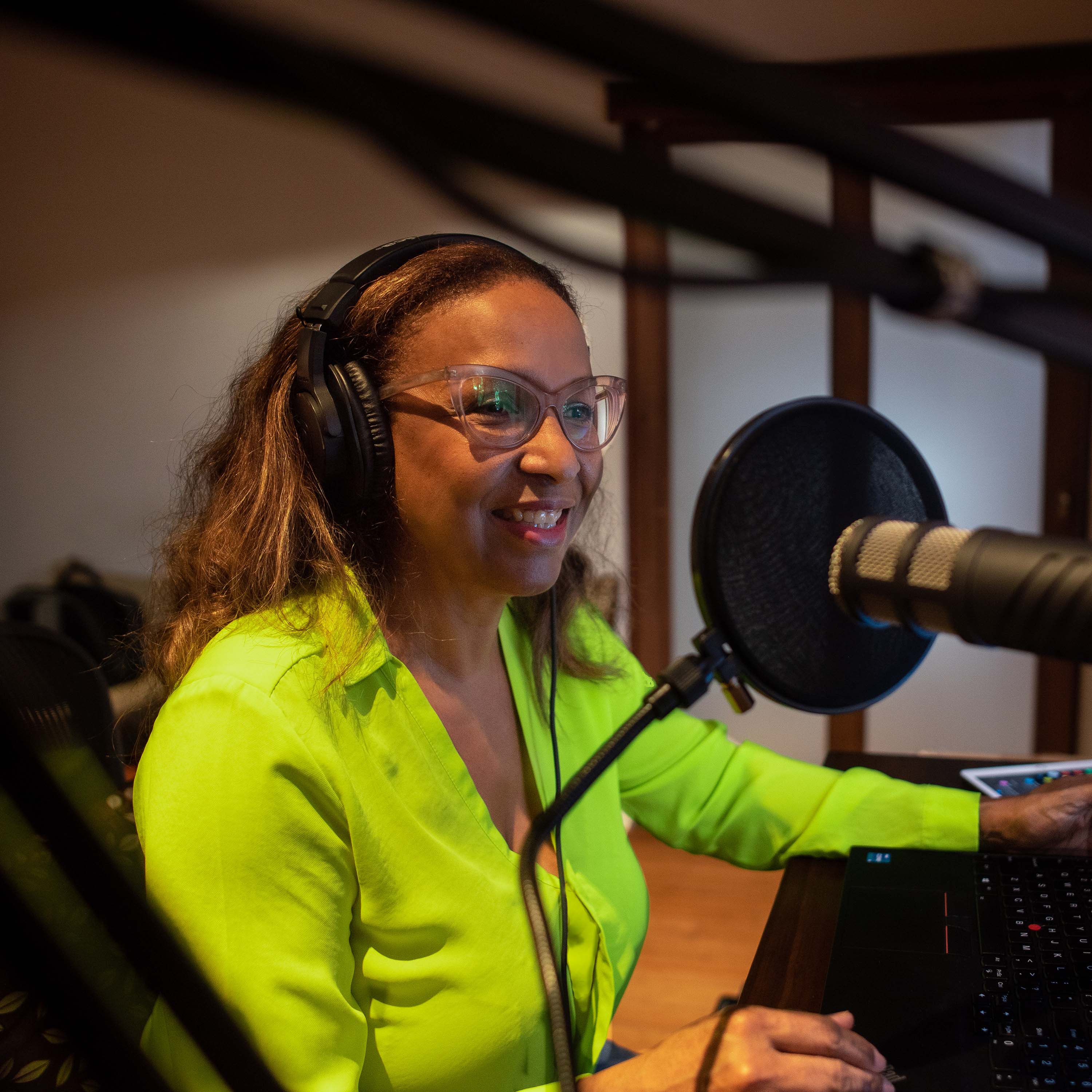
Speaker 1 00:00:01 Be bold. Take risks. Lead by example. Believe in your power. Say what you feel mean what you say. Hi, I'm Leslie Ann Cion, host of the new podcast series, cion 180. Join me at Cion 180 on this journey of discovery and advancement.
Speaker 2 00:00:38 Searching for that ideal house or rental property with a picture perfect view of the ocean, or lush green hills and breeze that gently caresses your face. Century 21, Grenada helps our clients to go beyond the search to living at Century 21. Our agents understand that a home isn't just walls and a roof, but a sacred, inspiring place where you learn, laugh, play, and create. Contact us today at C 21 grenada.com or give us a call at (473) 440-5227. Go Beyond with Century 21.
Speaker 1 00:01:19 Hello and welcome to C on 180. I'm your host, Leslie Ann Cion. On our podcast series, we feature Caribbean voices from around the world who are making real differences in their areas of influence. I invite you to check out my website at c on one eighty.com or visit your favorite podcast streaming sites for current episodes as well as past shows. You can also visit my Facebook or Instagram page for weekly updates, titbits advice and interactions with me, your host and fellow listeners. Today on the show we are discussing taking risks, making bold choices, blazing trails, pivoting in the world of business. And I couldn't think of anyone better who encapsulates the theme and the inspiration behind this podcast than this powerhouse businesswoman and lawyer and childhood body of mine. Chandel Nayak Compton, born in London, England, and raised in Grenada. Chandel is a long-serving attorney in practice for more than 25 years, admitted to the bars of Maryland, uh, the District of Columbia, as well as the bars of St.
Speaker 1 00:02:39 Lucia and Grenada. She is a master in a agri agribusiness and a masters in international law. She is serving as the Honorary Council of India to Grenada, has served previously as chairperson of the board of directors of the Grenada Board of Tourism is the chair of the National Wear Committee of the Ministry of Culture and President of the Organic Cocoa Farmer's Cooperative Society. Limited. Most importantly, she's the owner and managing director of Belmont Estate, a historic plantation that she diversified into an award-winning premier agri-business enterprise, offering organic products from goat cheese to treat bar dark and milk chocolates. She has received numerous awards from the Grenada Chamber of Industry of Commerce from the Caribbean Tourism Organization, and is the first woman to receive the Anthony En Sagar Awards for Excellence Award for Entrepreneurship. And she is with all of these achievements, her role as mother of two beautiful children, she will say is her most important role. Welcome Chandel to C on 180.
Speaker 3 00:03:50 Thank you very much for having me. It's just great to be here. You know, I love your show. I love that you talk about issues that are relevant to Caribbean businesses and Caribbean people. So to have me and to showcase Belmont estate on here is a real treat. So thank you very much.
Speaker 1 00:04:10 You're so welcome. Congratulations. First of all on the successes of Belmont State. I know that you're very modest person, but we have to give you accolades where accolades are due. And being a number one tourism attraction in the Caribbean is simply amazing.
Speaker 3 00:04:27 Yeah, thank you. Thank you so much for your recognition, your congratulations, and for your constant support because you've been really, um, an inspiration for me and for our business, and you've been a keen supporter. And, um, for us it's really, it's a big deal. It's a big deal to have been recognized on the American market in such a profound way. And not just the recognition, but the fact that we were nominated and, um, not just us, but so many Grenadian businesses have been nominated and even placed in the top 10. Fantastic. And, uh, this happens because of the, the passion and commitment of my staff. I have to say kudos to them, you know, every day they come to work committed to making the Belmont Steak Ex experience a very special one for our guests and of course our guests who come and have a great time and document and rate their visitor experience.
Speaker 3 00:05:27 And of course, the numerous people like you and so many other grenadians and guests to Belmont State who voted for for us. Uh, but I do have to say, uh, Leslie, that this is a lot of this. We have to give kudos to the Grenada Tourism Authority and their marketing program and the C E o Ms. Petra Rocha entire team, they have been doing prodigious work in marketing Grenada, internationally, and we have seen that grenada's visibility is just soaring. We are receiving all of these recognitions, these visits, appearances on shows. We're in videos, we are in articles worldwide, and that's translating into increased visitor arrivals, move visitor, ex move visitors spend better for yes, for, um, economy. So congratulations to all of us. Congratulations to all stakeholders and to all of Grenada. It's, it's an exciting time and we just have to keep lifting the bar and keep on growing.
Speaker 1 00:06:32 Thank you. Uh, well said. And I know that it takes a team effort to get where we are and to accomplish many great things, but I know that you are also a very smart, brilliant woman, and you would want to take away the attention from yourself, uh, which is what you really deserve, because a lot of us want to know how do you manage to do it all? I mean, here you are switching countries, returning to Grenada, switching careers or having dual careers, um, marrying tourism with agriculture and still having a legal practice. How do you manage to do it all? What's your secret,
Speaker 3 00:07:09 <laugh>? I have to just, um, put it up to God, you know, I'm a person of faith and, um, mean I think that God has put me back in Grenada and at Belmont has stayed for a purpose, and I see my life as a life of service. Um, and in my legal career and in my business, I think they're both about service. They are both about opportunities to, to teach, to develop, to enrich lives, to be an ambassador of a God to my country, to my people, and to create happiness. So as much as my businesses are different, my profession and my my business are different, they have similarities, and I'm able to use those similarities to fulfill my, my mission. So my life, my law practice, for instance, as you know, it's about solutions. You know, we are solving people's problems, which eventually bring them happiness.
Speaker 3 00:08:06 And I, for me, it's great joy to be able to help someone to sort out some legal issue. You know, to be able to use my practice also to, to do pro bono services and to help people in need brings me joy. And similarly, I think at Belmont State, it's a lot about, it's about learning. It's about helping people to grow, both our employees and our guests, meaning it's, it's like a school to help young persons to develop their career, to have a better life, to build relations with persons, to improve happiness and to, and to have fun. And for our guests, it's a lot about the same. You know, helping people to enjoy our agriculture, to gets to know us, to learn how to cook a good oil down, to make, you know, treatable chocolate, how to manage their life most sustainably. So in terms of how I do it, I think that, um, my, my mantra is about helping people to develop their lives and to bring happiness to people.
Speaker 3 00:09:07 And I'm able to use these facets of my life to do that. Um, can I do it all? Do I do it all? How do I do it all? Wow. It is, it's tough and you know, it, it's tough to balance so many things. And I've involved in a lot, and my family is a big part of my life. I mean, my, my parents are still alive. I have aging parents that I have to take care of. I have, you know, young adults, children, and sometimes some things suffer and, you know, it is the reality that, but you do your best to, to balance, to give the attention where it is needed. And you know, you know, eventually you hope that <laugh> you come out on top and you keep people happy and you, you learn to pivot and to, to balance. And, you know, in the mix of all of that, you still have to ensure that you're taking care of self. And I think sometimes self suffers the most. Yeah. But it's a journey and it's a journey in learning how to, you know, to balance it all so that you keep your sanity, you stay on top of things, and you're still able to lead, you know, in your business, in your, in your home, and in the, you know, the various able areas that you have <laugh>,
Speaker 1 00:10:20 It, it's, it's such a good point that you raised that, you know, sometimes something might be falling behind. Yeah. I listened to Shonda Rhimes, um, delivering an address to, uh, uh, a graduating class, I think it was last year. And she was saying, you know, everybody asks, how do you manage to do it all? And, you know, this is just brilliant. And she says, you know, I might be managing to do it all on the outside, but in the background, I'm probably failing at something <laugh>. And she gave examples of it, you know, like, I might be doing a script and then I couldn't go to my ch my kids' concert, you know, so there's always this, this delicate balance. But, um, of course, Uhhuh chandel, I, I want you to lead us into the spark, because I believe it is a spark that led you to develop and diversify, uh, Belmont State into this outstanding eco-friendly, um, agricultural business enterprise. One as a woman, and then two as a lawyer, which is so different, <laugh>, uh, from, from legal practice. Tell me about that spark.
Speaker 3 00:11:25 Yes. So I think it was a few sparks, <laugh>. So initially I would say that it was my devotion to my grandmother, so family values, wanting to come back to take care of my grandmother, who was, um, aging and wanting to give back, but also wanting to give back to a place that, you know, was my roots, you know, my country and my, my home, my family business. So I had grown up in this, on this farm and saw a vibrant business and, uh, you know, noticing, you know, over the years that the business had, you know, practically, you know, halted to, you know, an end. So, you know, I really wanted to try to restore my family's business and to create a legacy for my grandparents, Norbit and Liris naia, who had, you know, worked so hard as simple people who started up with a village shop.
Speaker 3 00:12:24 They were able to become extraordinary entrepreneurs and to do so much for Grenada, especially in rural Grenada. And for me, that was important to ensure that their legacy was kept alive. Yes. And so in my business, I think if I can influence one of these kids that come on school tours to think big and think outside the box and think about something that they can do in the rural community to start a business or influence one of my staff who's, um, you know, working in the kitchen to, you know, to become an entrepreneur or any, you know, any person who touches Belmont State, you know, whether they visit or hear about, um, learn of what we do and be inspired, then I am gratified that, you know what I'm doing, making a difference,
Speaker 1 00:13:11 Very important point about being inspired by others and using that as an example to transfer to other generations. I think that's what I'm getting from you. And it is the reason why I think that you are admired so much that you have been able to successfully marry tourism and agriculture in such an impactful way, and that you're willing to share it with the younger generation who really and truly never appreciates the importance of agribusiness and agriculture. And do you think you have a role to play in turning around that misconception, that stigma that's attached to agriculture?
Speaker 3 00:13:52 Absolutely. You know, I want people to see the, the beauty of agriculture and how important it is in our lives, in our economy, and what a difference it could make. And I hope that by, you know, this business that we have young people can be motivated, can be inspired, and, uh, that they can see the opportunities lie that lie in agriculture.
Speaker 1 00:14:18 So the journey for you is, is personal.
Speaker 3 00:14:20 Yes. Right. So I think that agriculture is so important in Grenada that our government should make agriculture mandatory in our schools. You know, agriculture is how we feed our nation, and Grenada is such, has such fertile land, and we have such great climatic conditions for growing food that each one of us needs to learn how to grow our food so that we can feed ourselves and ensure that we have better health because we have confidence in what we are eating. And I think it, it not only helps us as people and of course the health of our nation and our economy, but it would be something so unique and special if our tourist also knew that we are growing our food at home ourselves. And they too would have confidence when they come to us that they know that they're having healthy, clean, green food to eat.
Speaker 3 00:15:15 That it adds to the authenticity of what Grenada has to offer. And of course, it helps our food import bill and uh, you know, it's one of the focus areas of our government. So I am looking forward and I'm very excited about that. And I'm looking forward to agriculture really becoming more prominent in our economy and really generating more money for us. Um, in terms of job opportunities. There are so many opportunities that are related to agriculture, and it's not just about farming, although farming is sexy and I wanna see more of us farm, and it's just exciting to see women and young people getting to farm in. But I mean, you can become a food technologist, a chocolate maker, you can be making all kinds of products from the, the raw food products that we have. And, uh, so there are tons and tons of opportunities that we need to open up our young people's minds to so that they can see it is not just producing the raw food, but um, but their end products. And there are other processes that need to support the growth of good, healthy food that they can, you know, consider.
Speaker 1 00:16:28 Yeah, I think all of this is important, and I'll tell you, it's a step by step process. It starts with Belmont State and St. Patrick. It starts in Grenada, but it should also, uh, cascade into other Caribbean countries. And I think, um, part of your role too is ensuring that the region changes its perspective mm-hmm. <affirmative>, um, on agriculture, that we become more sustainable, that there's inter-regional trade between our respective islands that we can share with one another. You might be specializing in a particular vegetable or fruit that we can import and export. Um, I rarely want us to develop that perspective that this is all part of a regional transformation, not just within the sectors, but within the region itself. Don't you agree that that's something that we need to advocate more?
Speaker 3 00:17:19 Absolutely. And I think that Grenada has a huge part to play because we are so, um, fortunate, um, that we could produce food in such high quality and in volumes because we have people and we have land space. I mean, we have an island like, um, Barbados that is so close to us and has, um, in tourism is a massive industry there. They have a lot of people to, to feed. So, you know, there are tremendous opportunities. We have Antigua that's not too far away, and many of the islands that are big on tourism and are not as fertile and, um, productive as we are that we can produce food for, put a plan together and, you know, get young people involved. Young people must see that this is the way for them to earn a live in, for them, to get rich, for them to make money. Um, that's what's going to drive people yes. To get into agriculture and that we have the support mechanisms that they can get, they can get, um, market for their products, that they can get the support that they need to ensure that their products are, uh, premium quality and of course, that we can do it organically as much as possible. It's important that our food is safe, that we are not producing, um, in GMO foods and that it's organic and clean and safe for us to consume.
Speaker 1 00:18:39 That's correct. That is so important. Um, Chandel, one of the things I know time race is so quickly, one of the key features of Belmont Estate Plantation is its authenticity, um, and its genuine representation of, uh, culture and heritage. And I think you've put a lot of effort into that. Um, have you had challenges in maintaining that standard? And also why is authenticity important to you
Speaker 3 00:19:09 Think that Ben, the kind of visitors that we get that come to Grenada are looking to have an authentic and a real kind of experience, and it's what we are marketing Grenada as. It's something, you know, very different from the, you know, the traditional Caribbean experience and our brand has been committed to authenticity and to excellence. That's what we have built our brand on. So, um, you know, we are also blessed in, at Belmont State to have a historic kind of a historically authentic
Speaker 3 00:19:44 Business. You know, it's naturally authentic. And so we want to build on that and continue to ensure that we give people that experience that is real, that they come to, you know, to terms with what true Grenadian life is like, that they meet real people that they, you know, meet people on that working on the farm. You know, when people come and have our being to bots hole, they, they enjoy that experience of touching the soil of, you know, of picking a cocoa of, you know, enjoying an oil down with the staff. And these kinds of experiences make it, um, authentic and very special for our, um, for our visitors. But, but added to that, um, is the expectation that the standard is going to be high. And maintaining that high standard, of course, you know, is challenging. I mean, we are in a dynamic business.
Speaker 3 00:20:38 The business is always growing and, um, having gained this kind of international recognition that we have, we have to, to ensure that our protocols and our standards are in place and that our staff are abiding by them. And getting people to accept these kinds of changes is difficult, but it's about building a culture, you know? Yes. This is now how we do business and trying to get everybody to come on board because this is all bread and butter. This is who we are, and this is why people come to us. They come to us for excellence, and they come to us for authenticity, and they come to us for happiness. So we have to ensure that we are able to deliver that, you know, every day we additive
Speaker 1 00:21:24 Consistently. Yes.
Speaker 3 00:21:25 Now we are audited, we have, you know, audits and, you know, visits from our kosher inspectors or organic inspectors. We could have a popup from the F D A. So we have to ensure that we're on top of our game and that we are following the protocols that we have set for our business.
Speaker 1 00:21:43 Very important. Productivity, consistency, and delivery of service. I mean, these are very important messages for us to get across to, to our employees, a a across the board. Um, what I like about w when you speak is that one can sense that you are constantly rethinking, uh, recalibrating making adjustments. So it's a, a fluid process. And it reminds me of something one of our guests said earlier. Um, in the previous season, Stacy Thompson, she talked about, you know, being constantly under reconstruction, so to speak. And one of your attractive features, I think is how you inject that, um, into Belmont State. For instance, I've been to your Indian Arrival Day celebrations mm-hmm. Um, quite often. And, and that was something that was unexpected and, and delightful. Mm-hmm. Um, because it is part of our culture, part of our Caribbean. And how did you come up with that?
Speaker 3 00:22:39 Sure. <laugh>. Well, you know, as you said, it's part of our culture. It's part of who we are. And my, you know, my, my grandparents were indore and, um, so it was naturally a part of our product. And, uh, we believe that, I mean, that, uh, when the Indians first came, that some of them came to Belmont State too as a holding area. It was a holding estate for them. And of course we have had many, um, Indians that have worked on the estates. So it's part of our heritage, and we want to, to be able to express that, you know, all sides of of Grenada. I mean, our European or, or Indian and in the Indian was actually the most recent. So it is a part that we, we should know a lot about, but unfortunately we hear the least about. Yes. And it's because our Indian population was so small.
Speaker 3 00:23:36 I mean, the assimilation was intense, and we have lost a lot of our cult of that part of our culture. But, and there is so much in, um, what we do that is Indian and a lot of our foods, you know, I mean, our curry and our roti, spices, yes. You know, our spices or mango, you know, um, many things that we use are part of our Indian heritage. So we wanted to be able to revive that for people to understand the importance of our Indian heritage in our lives, in everybody's lives in Grenada. It's not about, um, you know, about separating, but it's about celebrating diversity, celebrating who we are as a whole, and just to giving us more perspective into our uniqueness as grenadian people.
Speaker 1 00:24:23 Inclusion rather than exclusion. Yeah.
Speaker 3 00:24:25 Mm-hmm.
Speaker 1 00:24:26 <affirmative>. So Shael, give us an idea as to some of the challenges, um, that you encountered along the way, both in setting up and continuing to establish Belmont State Plantation to where it is today.
Speaker 3 00:24:40 So for us, I think we have to recognize that once we are in business, there are going to be challenges. Yes. And so it's something that you always have to deal with, but you as an entrepreneur have to be able to take control, manage your team, think of other strategies, pivot and look for opportunities and say, what is the opportunity that this challenge presents? So for instance, when I was starting up, I had this grand idea of doing this agritourism business and starting tourists and restaurant. And so I took it to the bank. I had a few bankers come to visit. I even spoke to people in tourism at the time, and the response I was getting like, is, how would you expect tourists to drive from St. George's to Belmont State to see what, to see cocoa and bush? Yes. And, you know, I had to, it was tough because for a lot of time it was just me believing in myself and trying to get people to come on board.
Speaker 3 00:25:42 You know, at first of course it was my employees, but eventually I was not able to get any money. And it was my, my, the greatest deterrence to the startup was not having the funds to do it. Yeah. But eventually we got pushed into it, you know, you know, we had a visit from our then prime minister Yes. Who came and had a visit and enjoyed the place, and the press came and then people wanted to come. So, you know what? We built a restaurant with just using natural wood. We got coconut leaves from by the beach and wood from, you know, by the beach and, and, and on the estate. And we built a restaurant that could seat 25 persons. And that is how we started. I knew nothing about restaurant service. I didn't know what side to serve. I was a lawyer. I never went to hospitality school, but just from my drive and believing in myself and getting a few persons around me to believe, you know, we did it.
Speaker 3 00:26:36 So don't let, don't even let finance get in your way. Find a way to make it happen. You know, the, we had lots of challenges during the pandemic, of course, I mean the hurricane. Um, and during this pandemic, we used the time to re-strategize and it gave us an opportunity to get into the export market. Our business at Belmont State was virtually closed, and we had to find a way to stay afloat to get our employees back at work. And so we focused on production, we started to export, we started an online shop, and we may not have had the opportunity or the time to focus on that if we busy with tourist writing or face. And, uh, so I mean, it was a great opportunity for us. And, you know, so we entrepreneurs, you know, just, you gotta ban your belly like we say, and just look, try to think outside the box, brace yourself and look for ways to pivot and innovate despite challenges. You're gonna make it,
Speaker 1 00:27:38 You're gonna make it excellent. Creativity, ingenuity, out of tragedy comes opportunity. We need to embrace it. Don't be turned off by the challenges that are thrown your way. It makes you stronger.
Speaker 3 00:27:51 Yes. And still try to have fun while you're doing it, you know? Yes. I mean, it, being in business can be stressful, but yes. Try to enjoy the goodness of it, you know, the Yes.
Speaker 1 00:28:02 When it comes your way. Yes, yes. <laugh>, I love chatting with you, but I want to end off, uh, our little discussion by asking you, um, what is the philosophy that underpins so much of what you pursue and what you have succeeded in? There must be something that Chandel has in her d n a that she can share with us that explains all of these courageous, bold, risk-taking decisions that have ended so successfully for you and your team.
Speaker 3 00:28:37 So, uh, it hasn't ended yet. Uh, it's not over till it's over.
Speaker 1 00:28:41 <laugh>. That's true. It's a continuum. It
Speaker 3 00:28:44 A work in progress. Don't we know that? But you know, as I said,
Speaker 1 00:28:47 Because you want to move it to the next generation too. Absolutely. Absolutely. You were speaking about intergenerational transfer of enterprise. Yes, yes. And legacy.
Speaker 3 00:28:56 Absolutely. You know, and not just for family, but for community as well, you know, because it's a, it's a community, um, project. And as I said before, I believe it's my calling, you know, that I should be in Grenada, that I should serve my country, my people, and to preserve my family's legacy. And I think at the end of the day, um, I wanna live my life, that when I meet my creator, I would have done the best with the resources and the gifts that he has given to me. Yes. So, and that's what keeps me focused. It, what's, it's what keeps me going. My kids are already asking when I'm gonna quit. I said, I'm gonna quit when I'm in the grave because <laugh>, you know, I see my life as making a difference in whatever I can do to empower people, to improve people's standards of living, to just create a be a beautiful space for people to enjoy and for Grenada to say, Hey, you know, we have something special up there in St. Patrick's for our, um, our guests to enjoy. And we have special products that, you know, are healthy and clean and green, that are sustainably grown for you to enjoy. I think that's what keeps me ticking. Yes. And, um, I think I'm gonna continue to do that until, until it's over. So I want to use my resources the best way I can to serve others.
Speaker 1 00:30:16 Thank you. That's a beautiful way to end service to others. We are very proud of your accomplishments and all that you are doing for us in Grenada and in the region. And by setting the example, not just for women, but for everyone in the Caribbean, and especially in Grenada. Thank you so much for chatting with me this morning. Thank
Speaker 3 00:30:37 You so much. Thank you so much for having me on. It was really a pleasure and given me this opportunity to share and, you know, thanks for what you're doing as well, just for giving the forum for people to speak. I think it's really extraordinary and keep up the good work. And I thank continue to thank be inspir by you.
Speaker 1 00:30:53 Thank you. Likewise. It's a mutual exercise, <laugh>.
Speaker 3 00:30:56 Yeah. Thanks so much. Thanks so much today.
Speaker 1 00:31:05 Thank you, Chandel. Thank you so much for chatting with us today, sharing your journey and your philosophy on business and tourism. I've learned so much, and I'm sure our audience has as well. Anytime you're in Grenada, you must visit Belmont State. It is an experience for everyone. Once again, thanks so much and all the best to you and your team. Thank you for being with us on the podcast C on 180. This is season four, and we continue to learn from our community of professionals who've graced our platform. Don't forget to hit us up on the social media platforms. We do love hearing from you. Tune in again next Sunday for another episode, or check us out anytime on YouTube and on cion one eighty.com. For all current and past episodes, this is Cion 180. Be safe, everybody.