Episode Transcript
[00:00:02] Leslie Ann Seon: Seon 180 coming up in 5 4-321-Be Bold.
Take risks.
Lead by example.
Believe in your power.
Say what you feel, Mean what you say.
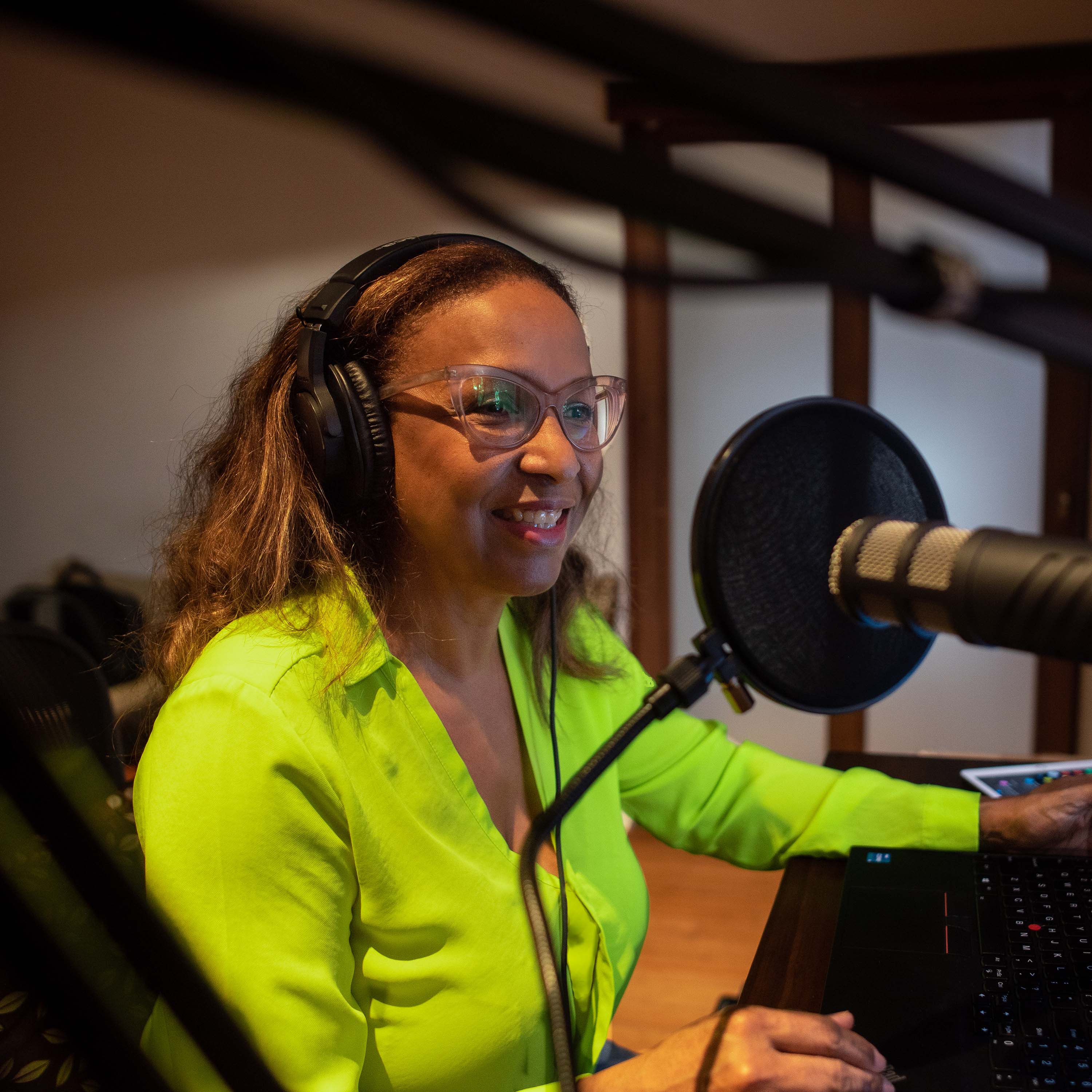
Join me at seon180 on this journey of discovery and advancement. Hello and welcome to the seon180 podcast. I'm your host, Leslie Ann Seon.
This podcast is all about igniting conversations and empowering lives with real talk, real people and real change. With over 20 episodes across four seasons, we feature inspiring voices from the Caribbean and the diaspora, diving into topics like health, politics, leadership, the arts, finance, tourism and much more topics that truly matter to our community. I invite you to check out my website at the podcast seon180.com or your favorite podcast platform to catch our latest episodes and follow us on Facebook and Instagram for updates, advice, and engaging discussions.
Today's Topic “From Beaches to Battlegrounds: The Caribbean's Climate Challenge.” I have a very special guest with us today, Dr. Ainka Granderson, the Resilience Program Manager at the Caribbean Natural Resources Institute. Originally from Trinidad and Tobago, she's a Climate Change Adaptation Specialist, with over 8 years of experience working in climate change and environmental management in the Caribbean and Pacific small island developing States. She oversees a portfolio of projects on climate change and disaster resilience across the Caribbean region. She also co-convenes the Caribbean Climate Justice Alliance, which brings together over 60 civil society organizations, grassroots leaders and activists, academics, creatives, media and other non-state actors to promote climate justice. Dr. Granderson has a PhD in Resource Management and Geography from the University of Melbourne, Australia. I am delighted to have you on board. Welcome to seon180, Ainka. Thanks very.
[00:02:35] Dr Ainka Granderson: Thanks much for having me. It's great to be here.
[00:02:38] Leslie Ann Seon: Lovely. Thanks for this post-Carnival Sunday morning discussion on a topic that I know is near and dear to you.
Now, I don't want to state the obvious, but it is clear for all of us to see that weather patterns and weather conditions have changed tremendously in the Caribbean over the last couple of decades. And so, my first question to you is, are climate models predicting worse hurricane seasons and more unusual weather conditions, and, if so, what can be done to mitigate the risks?
[00:03:16] Dr Ainka Granderson: So yes, both regional and global climate models, as well as other climate data, indicate that hurricanes and tropical storms are becoming more intense and will likely get even worse in the future in the Atlantic. And what this means is that we'll get more Category 5 hurricanes like Beryl, and see more severe impacts from storm surge, coastal erosion, flooding and high winds. And I think along with this, we're seeing more unpredictable rainfall and shifting seasons where rain comes when it doesn't usually and doesn't come when it's expected.
[00:03:59] Leslie Ann Seon: Yes.
[00:03:59] Dr Ainka Granderson: As well as shift in our ocean currents and even things like Sahara dust that I don't think people necessarily connect with climate change. We're seeing more of this linked to climate change and drier weather in Africa and then obviously sargassum seaweed as well. And so, all of this is affecting our health, our livelihoods, especially those based on tourism, fisheries and agriculture, and our natural environment.
[00:04:26] Leslie Ann Seon: Correct. It's funny that you mentioned the Sahara dust and the Sargassum issues. I didn't even think that there was a connection there.
That's good for us to know. So, tell me, what are some of the main challenges because of these unusual weather conditions? The rise in sea levels, the rise in the temperature of the sea, these severe droughts that we're getting, shorter rainy seasons, longer dry seasons. What are the main challenges that small-scale farmers and our fisherfolk in the agriculture sector face due to these shifting rainfall patterns and prolonged droughts?
[00:05:08] Dr Ainka Granderson: So this is a really good question because I don't think we always think about people like our farmers and fisherfolk and some of the other vulnerable groups that are really on the front lines of this crisis, so to speak, because they're really heavily impacted by these weather conditions and their livelihoods are very dependent on natural resources and vulnerable to changes in weather. So, I work with small-scale farmers in Fisherfolk in Grenada and other Caribbean islands and you hear them talk about the impacts and uncertainty from more extreme weather like storms as well as storm surge, rough seas, but also floods and droughts that damage crops and livestock on farms and also create unsafe conditions for fishers out at sea. And then there's the problems accessing clean water to maintain crops and livestock, but also for processing and creating value-added products, like all of the nice jams, jellies, the fish fillets, etc. that we can get as well. I think also the rising temperatures lead to more sort of heat waves and really uncomfortable weather and that can cause heat stress both in humans, but also in livestock like cows, pigs, poultry. And I think for Grenadians, especially with the Grenadines, rising sea temperatures is really important to think about because that can cause coral bleaching, which has been very bad over the last year. We've seen some of the warmest sea temperatures in over a decade or so over the last year and coral bleaching has been far reaching and significant.
And then there's also impacts on fish migration and the ability to catch certain fish when there's changing temperatures in the seas, changing currents, et cetera. So, all of this is affecting productivity, ability to go out and farm and fish, and there's also new pests and diseases as well that are affecting crops. For example, I know there's slugs affecting lettuce, there's a palm weevil that's affecting coconut trees. So, there's all these things happening which is really, I think, severely impacting their ability to be able to effectively grow their crops or go out to fish. And so, I mean, that then affects our food security because it can drive up food prices, lead to shortages, and this is very significant for us because we get a lot of our protein, particularly in these small islands, from fish and seafood.
[00:07:48] Leslie Ann Seon: Correct. And this kind of challenges is across the Caribbean region, right? Are our fisherfolk and our farmers recognizing or acknowledging that this is actually due to climate change? Are they sensing the differences and perhaps paying more attention to the climate change narrative?
[00:08:11] Dr Ainka Granderson: So that's a good question. So, I'm not sure everybody would say they probably know the term climate change because it's very popular. It's in the news all the time, whether it's nationally or globally, if you're watching CNN or BBC. But at the same time, I'm not sure how much they connect the science of the climate changing with what's happening. But I do think if you ask them if they're seeing changes in their crops, changes in their livestock, changes in weather patterns and seasons, if you ask it in that more sort of down to earth kind of simple way, they'll definitely tell you, yes, I've seen all of these changes and here are some of the things that we've been trying to do. So, I think firstly, there are things like developing early warning systems, including even apps that farmers and fishers can use to better understand how weather is changing, when the extreme events come in, like storms, floods, drought or even sargassum is meant to be washing up onto shore and so, they can prepare accordingly. So I think that's one of the things that we've been working on to try and address the fact that there's these shifts. And I think farmers are quite innovative. They are dealing with a lot of risk generally. And so, there's persons who are looking at how they can plant more drought resistant or flood resistant crop types or different types of livestock that can deal with harsher conditions, more heat, etc.
There's certainly a growing use of greenhouses for farmers who are growing vegetable crops, for example.
There's use of things like hydroponics, aquaponics, drip irrigation and things like that are more water and energy efficient. And they're also investing in things like solar panels so that they can reduce their energy costs and not be so reliant on the electric grid. When power goes down, then you have nothing to power the farm and the fishing facility, for example. So, I think there's some really interesting things that they're doing so that they are less susceptible to these different changing conditions that can wipe out everything in your income if you're so heavily dependent on one crop or not, you know, thinking about how to be diverse and have backup. So, I think this can help to enhance their resilience and it's kind of interesting to see that they are trying to innovate.
[00:10:40] Leslie Ann Seon: That's good because I was going to ask you about what innovative solutions are being pursued. So, it's great that you mentioned that. My follow-up question to that would be are the farmers doing this on their own, sort of figuring it out as the years go by, or is this in conjunction with new policies or education forum, for instance, that allows them to develop these innovative solutions? Because normally farmers and fisherfolk in the Caribbean are sort of stuck with their traditional methods, no? And it's difficult to get them to change because that's the way it's worked in the past. So why should we change now? And they're usually in an older age bracket. So, can you tell me a little bit about that? What sort of work are we doing in the region to assist in developing these innovative solutions to combat the climate change and the changing seasons?
[00:11:40] Dr Ainka Granderson: So yeah, definitely, they're not doing it on their own. So, our ministries of agriculture are very much trying to be innovative and try to encourage more what we call climate smart or resilient practices, and that includes both departments of Agriculture, but also fisheries departments. There are also several technical agencies that often lend assistance in this space. So, people might be familiar with CARDI, which is the Caribbean Agricultural Research and Development Institute.
There's also IICA, which is the Institute for International Cooperation and Agriculture, and then there's UN agencies like the Food and Agriculture Organization—all of which provide a lot of technical support for like extension to go out to reach farmers as well as fisherfolk and try to help encourage them to switch to more climate smart practices, to maybe identify some of the more willing to take risks and innovative farmers and fishers to pilot stuff. Because what happens is, if people see someone doing well using a new technology or tool, they are much more likely to pick it up, but if you just come and tell them, hey, do this, and they're like, well, we don't know if it's going to really work and you know, we don't want to take the risk and do this and then, you know, we don't make enough money, et cetera, and we go into more debt, etc. So, I think that there are some interesting ways to try to encourage them to ship. And I think because they are seeing a lot of impacts that they are willing to make shifts. So, for example, a lot of fishermen have started to shift to more energy efficient boat engines, and that's simply because they're spending so much more time at sea, using so much more gas that even without fisheries necessarily pushing them to make that shift, they're doing it themselves just because it makes sense. And that's true for many other types of technologies in some cases where they just need the support to be able to make it easier to find and catch fish and diversify the way that they're approaching things. And so, I think they're quite open to making changes, even though traditionally they can be very resistant to change, especially if they're older fishers or older farmers.
[00:14:01] Leslie Ann Seon: Yeah. So, the economics really of it is driving the change almost by force. So, that leads me to a curious question and that is, are they accepting new methods and new pursuits like the greenhouse farming and the hydroponic farming? Is that something that's catching on or it's still a wait and see?
[00:14:28] Dr Ainka Granderson: I think it's catching on, but at the same time it's not something that’s necessarily expansive. So, it's not like all a lot of farmers and fishers are doing this as yet. So, I would say that it's something that you'd have to sort of continue to promote and encourage them to be able to make the switch, but also make sure that it's accessible for them in terms of the types of materials being used, the cost and the support to be able to put these things in, because access to finance, access to insurance for both farmers and fishers, is actually very difficult to get often. And so, it makes them quite risk averse in some cases to do new things because it's expensive equipment, materials that they have to put in and they need to be able to ensure that it's going to work effectively, and they have some sort of backup for it. So, I think one of the key things is making sure that there is financing and support to do these things. And then there's the insurance to make sure that they do have the protection for this expensive equipment, but also protection for the farmers and fishers in terms of social protection when they can't work, or there are disasters and there are serious impacts on them.
[00:15:47] Leslie Ann Seon: I think those are very critical points that you raised because I was thinking you can have all the innovative solutions in the world available, but if it is not cost effective, then our farmers and our fisherfolk can't access it. So, we must have a pool of financial support that allows them to draw on these resources, pursue the innovative solutions without thinking that they're going to go under. And so, that leads me to another question, and that is, are Caribbean nations receiving enough international financial support for climate adaptation and climate mitigation efforts?
[00:16:26] Dr Ainka Granderson: So that's a great question, but I'll actually start by saying that there's some interesting things happening domestically in terms of trying to provide financing. So, I think there's more work with operators and credit unions to try and see how they can improve access to financing for farmers and fisherfolk. And there's some piloting of micro insurance schemes and livelihood protection schemes with some of the insurance providers as well, which I think are really interesting and valuable things. And I don't know if you're aware, but actually in Grenada and a few islands, they're piloting a new agricultural label called the “climate smart agricultural compliance” kind of tool and label that rewards compliance with more climate smart agricultural practices and actually provides a climate premium for those farmers that are really invested in taking forward that label, and they actually get a top up to the kind of money that they receive for their various contracts, et cetera, based on this new label and premium. So that's actually been piloted as one way to provide financing and encourage the shift to more climate smart and resilient practices, which I think is very interesting.
But in terms of international support, sadly, the short answer is no. So, the latest data, the latest data shows that we receive more funding for mitigation actually and reducing our emissions than for adaptation to climate impacts, which is actually concerning because as small islands we actually produce very little in terms of emissions, and so we actually need a lot more funding to adapt to the impacts that we're facing, whether it's on farming and fishing, but also on our infrastructure, as well as for loss and damage for big disaster events like Hurricane Beryl. And so, that's really concerning. And I think another stat that's really important is that less than 10% of the finance that we actually get reaches those on the ground that need it the most. So this includes households in poverty, small scale farmers and fisher folk, disadvantaged women, persons with disabilities, and in some of the other islands, indigenous and maroon communities as well. So, we're not seeing a sort of fair distribution of resources to those on the front lines. And so, this is something that my NGO, Canari, as well as the Caribbean Climate justice alliance that we co-convene, have really been advocating for more localized and equitable finance to address this kind of disparity that we're seeing.
[00:19:15] Leslie Ann Seon: You see, this is part of the public concern, you know, whether the financial support and assistance is actually trickling down to the man on the ground or whether it's just funding organizations and their leadership to attend fora for talk shop purposes and advocacy purposes, but really, really we are not feeling it on the ground. And so, there's a great deal of skepticism sometimes about that. I know we have a couple of prime ministers in the region who are building a platform for climate justice and climate resilience—Prime Minister Mia Motley out of Barbados, Prime Minister Deacon Mitchell speaking about climate reparations and compensation. So, at the senior top political executive level, obviously we are motivated to pursue more international financial support. I was reading worst case scenario about whether the Caribbean will become uninhabitable because of the disruptions that we face to our economies. Most of us being our economies based on agriculture and tourism, very fragile, very high risk, very vulnerable economic sectors. So, it's interesting that you raise that point and it leads me to ask you more about what are the kind of, what kind of climate agreements or policies Caribbean nations have been pushing for in the last five years because this is evolving so quickly. What was dominant 10, 15 years ago is it's almost obsolete. It's now a new thrust. So, can you tell me something about our key policies and current trends?
[00:20:59] Dr Ainka Granderson: Yeah. So, I think it's important that you highlighted, like, you know, Prime Minister Mia Motley, as well as Prime Minister Dickon Mitchell, and some of the efforts that we're trying to push at a sort of global kind of level, which are important. So, for example, there's the Paris Climate Agreement, which was signed back in 2015, so it's actually going to be 10 years old this year. And globally, we committed to reducing our emissions, keeping global temperatures from rising more than 1.5 degrees Celsius above pre-industrial levels, and then ensuring that we provide adequate financial, as well as technology support to developing countries like our small islands, so they can respond effectively to the climate crisis. And our Caribbean countries, including Grenada, were actually very instrumental in really pushing for that 1.5 degrees Celsius goal to be included in the agreement, and people may be familiar with that tagline “1.5 to stay alive,” which is really a kind of important target for us in terms of making sure that, for example, it doesn't warm so much that coral reefs are no longer viable; that we're not getting to a temperature level where we're getting, you know, storms and hurricanes every other year, you know that are constantly damaging us, and that sea level rise is not worsening at a really rapid rate, which might flood a whole bunch of our coastlines and even some of the lowest lying islands might be completely covered. So, we've really kind of focused in on that goal and really pushed on that. And that's something that we still push on. But sadly, recent data actually shows that we're close to breaching or reaching that goal and that we really need to accelerate our efforts and be much bolder if we don't want this to happen and for the problem to get much worse than it already is. And so, I think one of the important things that we're trying to do at the global level is advocate for those large high emitting countries, and here I'm talking about the US, UK, Canada, Europe and those other places that they really need to do their part and really take the lead in addressing this issue because they're producing the majority, like the vast majority of emissions, and really driving the problem.
[00:23:19] Leslie Ann Seon: Yes, I call them the BDCs, the big, developed countries. And for me, when you raise Paris 2015 immediately, I'm thinking, but we now have a Trump presidency in place, and we know what that administration's viewpoint and perspective is on climate change. Are we going to suffer as a result of that? Because it's very frustrating in the Caribbean where we undertake all these efforts to reduce the emissions, etc. We're so vulnerable. You talk about Bahamas, Cuba, Dominica, Grenada have all suffered a series of natural disasters, lots of flooding in Trinidad, etc. I mean, we are affected by this every single year and we're heavily debt-ridden countries with vulnerable industries. Certainly, we need to be advocating at the international level, of course, to get these agreements and action on them—not just talk about them, but action on them. What can we do without the US buying in, for example?
[00:24:22] Dr Ainka Granderson: I mean, that's a really great question. So, the US pulling out of the agreement and also reducing significantly its funding in the region, but also for global action is a significant issue which I know actually came up in the last CARICOM Heads of Government meeting that was held just last month in Barbados.
And so, I think one of the things is we have to kind of wait and see how the geopolitics works out. In previous times when there was Republican administrations who also pulled back on how much climate support they were providing, European countries and others kind of tried to fill the gap, so provided more funding. There's also the private sector and other opportunities that we can look at how we can leverage. So, the US is not make or break. They're very important, but there's ways to sort of work around them not necessarily being on board or showing the leadership that we want to see. But obviously we also need to keep negotiating and pushing for things to happen because, you know, while the government, the federal government, has a specific stance, remember, specific states, like California, are still very progressive and do you know what needs to be done to address issues? So, we'll kind of have to see how it plays out. But it is a major concern. And I think in particular we need to keep pushing around the climate finance kind of area in terms of making sure that we're getting adequate support, whether it's through the US or other bilaterals, but also the big multilateral funds and also thinking about how we can leverage private sector because I think last year they set a new target which was meant to be 1.3 trillion US annually being provided to developing countries like our Caribbean islands, and in fact, they only agreed on 300 billion US a year, which is much below what we were hoping to get. And so, there's a real scope to push, to scale up and out the amount of financing that we're receiving and to get a little bit more creative in terms of where that's going to come from as well, in terms of thinking about the private sector, but also crowdsourcing, how we leverage the diaspora, and there's various really interesting and innovative things that can be done. And so, I think that's an area that we can really push on and see what we can make happen.
[00:26:54] Leslie Ann Seon: Yes, I guess it's every drop fills a bucket, right? Every drop of water fills a bucket. It may drip, drip, but eventually you're hoping to get it full. I'm not sure that we've got the time on our hands to allow for a drip, drip kind of policy. And so when you have a big international player like the US that would be backing away from aggressive pursuit of policies that can assist us in the adaptation and resilience measures, it leads me to believe, are we looking at changing our methodologies, how we approach advocacy? Are we looking at the international power players to assist us? The oligarchy of billionaires who have loads of money available, that might be philanthropists who can assist us in this process? So it's not just our representatives from the region, because by our very name, small island developing states, we are like a fly on the wall, almost. Nobody’s looking at us. So, you do need that frontage of someone with backing of resources, profile and power to assist us in the advocacy. Do you think that's worthwhile following?
[00:28:01] Dr Ainka Granderson: Yes, I definitely think that's what exactly what we need to do. We really need to put ourselves out there, you know, advocate really effectively, be very sort of front and center. So, for example, Prime Minister Motley gets a lot of attention when she goes to international meetings, but we need to have other prime ministers also kind of there. And we need to be showing a collective face and front that backs up the things that she's calling for, which I think are all very relevant. In addition to that, I think courting, as you said, these kind of international billionaires and philanthropists who have funding that can support us is an also really interesting and creative way of looking at this. For example, I believe it's Michael Bloomberg that said that he would fill the gap from the US Government to the UN Climate Change Agency and other sort of arms that it works on so that they would still have the funding they need to do the work that's much needed and critical in terms of time. And so, we are seeing some people step up. And so being able to encourage that to happen more is really important, and thinking about how we can get our private sector domestically, regionally, but also broader investment to really kind of leverage that to address some of these issues and not look entirely to these sort of big international funders like the World bank and those big funds like the Green Climate Fund, Global Environment Facility, etc. to provide the majority of the financing because I'm not sure that that's where it's going to come from.
[00:29:46] Leslie Ann Seon: Yes, I think we need to look at that quite serious and maybe our prime ministers of CARICOM and NGOs like yourselves can certainly collaborate to target this, because a lot of them enjoy cruising the Caribbean with their mega yachts. You know, they're in our harbors and our ports all the time. They enjoy the weather of the Caribbean and the beauty of the Caribbean, so why not assist in keeping this source of enjoyment on as long as possible? It's just that we have to meet them in the right place and get them to buy in and sort of appreciate what's the vulnerability of our region. And I think it's not just the Caribbean, but also the Pacific, small island states as well, combined. It can't just be done in isolation. I think it's an all-around effort and we need to keep it on that high point of the radar and not just be scare mongering, but backing it up with data and statistics, which I'm seeing a lot more of coming from entities like yourselves and internationally. So, tell me, as we're wrapping up the podcast, the international partnerships that we are pursuing at the moment, have you actually seen sufficient progress in terms of specific to the Caribbean, the Caribbean's fight against climate change?
[00:31:13] Dr Ainka Granderson: So, yeah, there's some interesting things happening. So linked to the point that you just made about trying to leverage investors and wealthy individuals, there is the Caribbean Climate Smart Accelerator, which is one of the mechanisms that's trying to do exactly that, trying to bring in funds from investors and target it to different initiatives that meet the sort of climate smart targets that we want to see and that the investors think are innovative and a good value for money because we still have to be able to, I guess, encourage them to give the funding. And so, it has to kind of meet some of that criteria. And then some really interesting stuff, I think, in terms of setting the precedents, in terms of demanding that there's action and even being able to force people's hands a bit in terms of litigation and legal tools. There is currently the advisory opinion that's in front of the International Court of Justice, the ICJ.
[00:32:18] Leslie Ann Seon: Yes.
[00:32:19] Dr Ainka Granderson: And so that has been brought forward by Vanuatu and a number of other small island developing states, including, I think Antigua and Barbuda, and some others from the Caribbean. And they recently presented their arguments in sort of late November, early December to the courts and really kind of highlighted a range of evidence and data as well as talking about all of the impacts that are being faced by their countries, but the most vulnerable communities and groups. And I think it also allowed space for civil society and others to also present their case. It wasn't just governments, and I think it was a really interesting process. And now we're going to have to wait to hear what's the final opinion. And obviously this is not binding in the way that there's no sanctions or anything that's going to come out of it, but it does set a legal precedent, so that if they actually state that climate change is a significant crisis, it's threatening human rights and causing all of these impacts and that you must do something to address it, that provides that sort of legal basis for many other sort of cases to go before courts, whether it's nationally, whether it's regionally, in our case today, the InterAmerican Court of Justice, etc. to really push for action to happen, you know, push for big companies, whether it's oil and gas companies, et cetera, to do the right thing, those types of things. So, I think that can be an interesting also way for us to be able to more strongly advocate and have more tools in our toolbox to really push for change.
[00:34:00] Leslie Ann Seon: Yes. Diversity of tools to hit this global problem that affects us so badly in the Caribbean. Dr. Granderson, any passing words, any last-minute thoughts that you'd like to leave our audience with? This is such a very interesting and detailed topic. I wanted to ask you about building codes in the Caribbean. Can we get to harmonizing them against, you know, the hurricanes and so on? But we've run out of time. But I'd like to give you a chance for just delivery of a message to those of us in the Caribbean who are still skeptical about climate change.
[00:34:36] Dr Ainka Granderson: Well, maybe to those who are skeptical, but also to those who are maybe feeling a little bit uncertain or depressed about the state of affairs, because I think there's both people who are still not sure it's that big a deal. And then there are people who are seeing the impacts and are very worried because they don't feel like enough is happening. And so, they're quite kind of depressed about it. So, I think, you know, recognizing that, I think collectively we have a lot of ingenuity and creativity and resilience that we can draw on in terms of trying to address this problem head on. I think there's lots of little things that we can do, but also there's things that we can do collectively, whether it's at the local community level, but also nationally in terms of putting in place the right policies, budgeting effectively. I think Grenada is actually one of the first countries to start doing climate tagging in their budget so that you can actually trace how the funding is being used. And that kind of helps you to really understand where it's going and how much is needed, et cetera. So, there's some really interesting things happening. I think trying not to despair and also not being laissez faire about this is really important.
It's everyone's business, as I love to say. And so everyone needs to do their part to really kind of understand what the solutions can be and not only make sure that they're happening at the individual or community level, but advocating that our governments are doing more and also those on international stage are doing more to really address this significant crisis and make sure we have a sort of just and equitable outcomes that we want to see because we don't want business as usual. I think to address this we need to see sort of transformative kinds of actions, and we really need to pull everyone up with us. So, we also need to see sort of really just kind of approaches to this as well. And remember our most vulnerable and those on the front lines as part of the work that we're doing. So that's what I would kind of end on that note.
[00:36:50] Leslie Ann Seon: Thank you. I see your passion for this topic coming through loud and clear. Thank you for the work that you do and for empowering us and our audience with the knowledge and information as to the efforts that are ongoing for climate change, resilience, adaptation and the risks to our climate and the risk to our countries in the Caribbean. I do appreciate your time today and thank you so much for joining us on this podcast.
[00:37:15] Dr Ainka Granderson: Thanks so much for having me. It's been great to be here.
[00:37:19] Leslie Ann Seon: Great. Thank you so much. Enjoy the rest of your Sunday.
[00:37:23] Dr Ainka Granderson: Yeah, you too. And same to the listeners as well.
[00:37:29] Leslie Ann Seon: To our audience: Thank you for being with us on the podcast. Seon180. “Today's topic “From Beaches to Battleground: The Caribbean's Climate Challenge.” Delightful conversation, very informative and it shows how much we have a role to play in dealing with the climate challenges facing the Caribbean and the world at large. Let us continue to support these efforts. This is season five in 2025, as we continue to learn from our community of professionals and experts who have graced our platform. Don't forget to hit us up on the social media platforms. We do love hearing from you. Tune in again next Sunday for another episode or check us out anytime on YouTube and on seon180.com for all current and past episodes. This is Seon180. Take care, everybody.