Episode Transcript
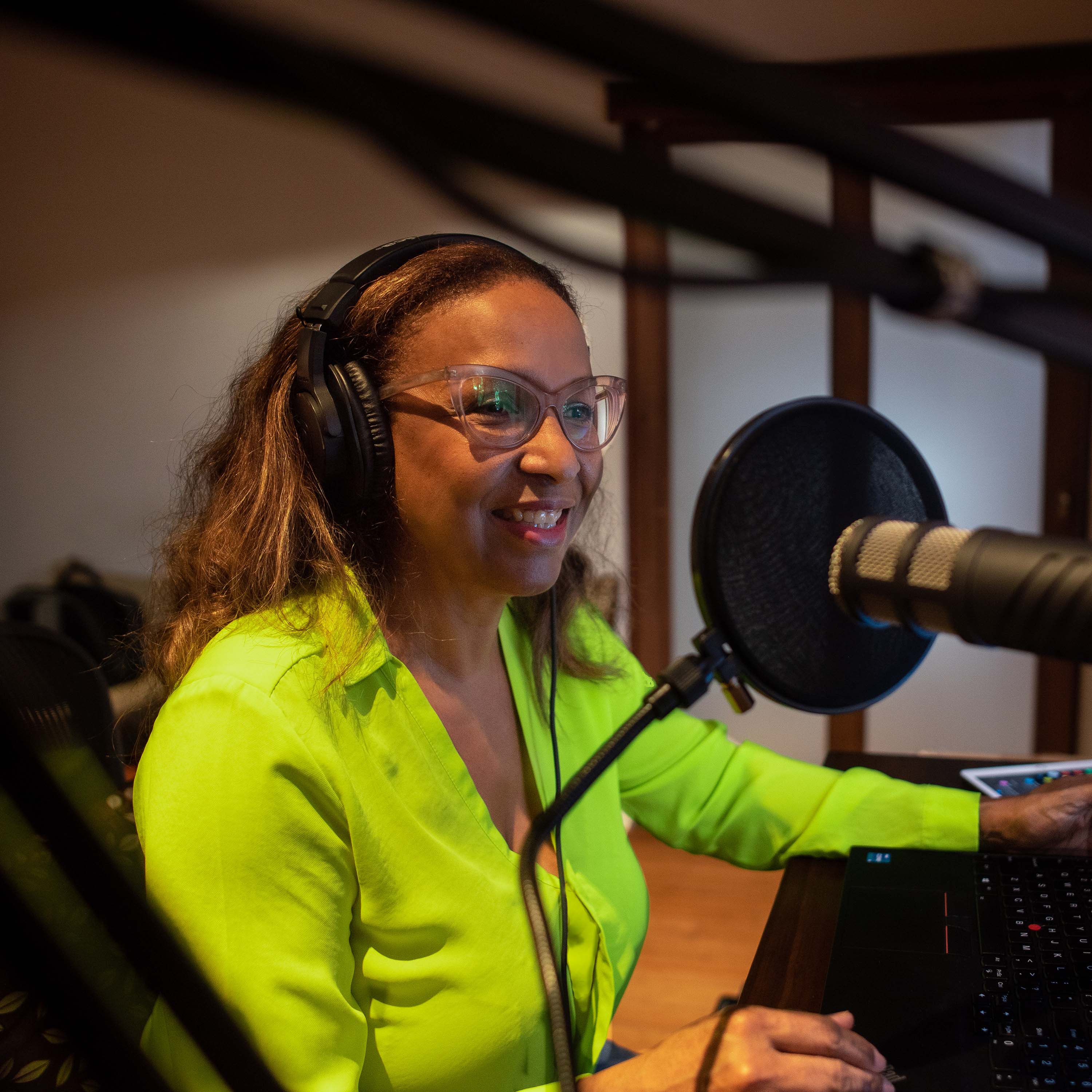
Leslie-Ann: Hello again everyone, and welcome to another episode of SEON180. I'm your host, Leslie-ann Seon. Today's episode is Women in Leadership. I want to thank you for following me on my website, SEON180.com, where you can listen to current and past episodes. Please follow us on our Facebook and Instagram pages for tidbits, advice, and interactions with me, your host.
Today on the show, we have a very special guest with us, a friend, and colleague, Dr. Violet Eudine Barriteau. She is a professor emerita of gender, and public policy. She's at the Institute for gender and development studies at the Nita Barrow Unit, the University of the West Indies Cave Hill campus in Barbados. She's the former chancellor and principal of the UWI open campus and the Cave Hill campus in Barbados, and the first head of the Institute of Gender Development Studies, the Nita Barrow unit. Eudine is a well-published author, and editor of many books, including books on Dame Nita Barrow, and Dame Eugenia Charles former Prime Minister of Dominica. She's published scores of articles and conference papers, and her published works include UWI inaugural, best-selling textbook, Interdisciplinary Perspectives in the Caribbean. She has the unique privilege of being honored by two Governments in the Caribbean region for her scholarship, and her contribution to education and gender development studies, from the Government of Grenada and the Government of Barbados. She has managed to retain her scholarship while maintaining a feminine style of fashion and style, as well as being able to rigorously advocate for female leadership and female participation, and dealing with the very powerful testosterone topic of leadership.
Today, she's here with us to discuss the topic of Women in Leadership, where we will get into her journey, her success, the opportunities, the challenges that women must face as they climb the ladder of success, and to establish why it is important for more women to step up to the leadership plate, and become the true leaders that we were meant to be, and we would also recognize some of our female leaders, right here in the Caribbean. I can assure you, it's going to be a very interesting and rigorous conversation. I admire this woman so much, and her contribution to the region cannot be overstated. Welcome, Eudine, and thank you for being with us today.
Dr. Eudine Barriteau: Good morning, Leslie-Ann, and thank you very much for that very generous introduction. It's my pleasure to be here with you today, and to have this conversation on women and leadership.
Leslie-Ann: Thank you so much. I know it is a topic near and dear to your heart. You've shown your passion about it, in speaking, and in writing, and so today we think it's an absolute, wonderful opportunity to spend 30 minutes chatting on women in leadership, with you. But first, I want to start with your journey to the very pinnacle of leadership at the University of the West Indies. Tell us about that.
Dr. Eudine Barriteau: Thank you. If you had asked this question, or this was posed to me as a little Grenadian girl on the hillside of Leapers Hill, Sauteurs in St. Patrick's, I would certainly have said to you, what are you talking about? Or even as a first-year student at the Cave Hill campus of UWI, but what I do know at whatever stage I was in my life, whether a high school student, a university student, research assistant, senior lecturer, all the way through, I have never been daunted by anything that I have faced, or anything that I was asked to do, or I wanted to do, and I think if I can distill one characteristic that, that defined me from very early, according to my older sisters, is that I was always self-confident. Now distilling where that confidence came from is another, another episode in its own right, and I, myself, would have to analyze that, but what I would say, in my journey, from my very first position at UWI, I was research assistant to a very distinguished Grenadian, Dr. Patrick Emmanuel. The late Dr. Patrick Emmanuel, all the way to Vice Chancellor and Principal, and along the way, I developed some things that I use, and that I'd like to share. I've always invested very heavily in preparation and planning, not for where I want to be, but for the job now, and I think that a lot of ambitious young women, and young men focus on “I want to get there,” and they focus so much on the other level that they ignore that the best advertisement for where you want to be is what you are doing now. So thorough preparation and planning, there is no substitute for substance, whatever you bring to the table, you must bring your best game, and there are no shortcuts. It's a myth that you can have shortcuts. I've also invested in appointing mentors, both persons that I would speak to, and this is a secret, and even persons that I don't know, but I admire from a distance. And so without them knowing it, when I was a young scholar, I would say, I wonder what X would say if they read something I write, and these are people who don't know me, and I'm reading their writing, and so I would put some rigor on myself and I would say, if he or she reads this, they would have to be impressed. So I appoint mentors more, the ones I knew, and the ones I didn't know, because sometimes you're in a field, or an environment that you can't speak to the person that you really greatly admire.
Leslie-Ann: Yes.
Dr. Eudine Barriteau: But you've been given social media, and excellent communication. You can admire their style. You can get information on how they operate and use that to guide you. I've also been very self-reflective, and I will advise persons in leadership, you must own your failures as much as your successes. When we succeed, we work hard, and you know, but we don't own our part in failure.
Leslie-Ann: That's right.
Dr. Eudine Barriteau: And our failure is not 100% due to someone else. We play a part in it, whatever part we play, we must also analyze, and understand that we can learn.
Leslie-Ann: We can learn from failures. A lot of us in the Caribbean are afraid of failure.
Dr. Eudine Barriteau: You have to learn from your failures, and I have regarded throughout my life, my professional life, every obstacle, every boulder as a stepping stone. So rather I see it as a gift, and so when something comes to me in the form of a problem, I say, this is not a problem. This is a stepping stone. So I analyze it, and I say, thank you for this, because I'm going to learn from that. Another one, is be willing to step out of your comfort zone. We take calculated risk. You know, again, we all want to be very comfortable. We want to be safe, but if you leave a particular position and go into another one, you're starting new in that position, but all the skills, experience, and expertise you had before, you take that with you. So, if you were in one field, if you were in broadcasting, and you're now going into, say, diplomatic relations, there's skills in broadcasting that assist in diplomatic relations.
Leslie-Ann: Correct.
Dr. Eudine Barriteau: So, you never, when you are at the edge of the cliff, you don't fall, you fly, because the other things that you bring, ball you up.
Leslie-Ann: Yes.
Dr. Eudine Barriteau: And even if it doesn't work out the way you want, again, analyze why, and then also do the networking and consultations. But again, not in a crass manner of, oh, I just want to get ahead, share with others as they share with you. And the final one, I would say define my journey from research assistant to pro vice chancellor and principal is to have a personal philosophy, that is discernible to others within your character. So there are people within the University of the West Indies, they will hear something, and somebody says, oh, Eudine. And they say, yes, that is Eudine, or no that is not Eudine because there's a consistency in the way that I have operated throughout.
Leslie-Ann: Yes.
Dr. Eudine Barriteau: And that is part of my personal philosophy, and I'd like to share that part of that philosophy. I have a deep and abiding belief and love for the Caribbean.
Leslie-Ann: Yes.
Dr. Eudine Barriteau: I stand from the position of what is right for the Caribbean…
Leslie-Ann: For that reason.
Dr. Eudine Barriteau: What is right for Barbados, what is right for Grenada. What is right for UWI. And I use that as a torchlight to discern and shape everything that comes towards me because I have a deep belief in us, in our talents, our creativity, our ability to get things done, and I respect that. So the love of the Caribbean I use, I take that with me, wherever I go, and whatever I do. And so you get that deep sense of respect coming through, and I also demand that of you.
Leslie-Ann: I think I agree with you wholeheartedly. Um, we like to take a regional perspective on this podcast. I've inherited that from my father who was a passionate west Indian and…
Dr. Eudine Barriteau: Well respected in Barbados, very well respected and loved…
Leslie-Ann: Yes, and he really liked every single island, you know, just as much as he loved his place of birth. And so I feel that it is incumbent on us who think likewise to continue to preach that to our young girls and our young women in the region. Uh, but I wanted to bring you back to CaveHill and to the University of the West Indies, and sometimes on the outside, it seems very difficult, as a woman to reach to the top of the university administration, and that is why I was so piqued by your journey and your story. Um, I'll give you a little joke. For instance, I remember, I'm a twice graduate of CaveHill, so I know well, the campus. And I remember when I was elected, um, president of the Guild of undergraduates, I was either the second or the third female in 1991, and there were very few female deans of the faculty, certainly no principal, um, or pro-vice-chancellor throughout the university administration. So, if someone was thinking about that as a young academic scholar, being female, what would be your guide in getting them to the top?
Dr. Eudine Barriteau: I would say, all the things I outline are critical, but I also, one of the things that I think also defined me is that I do not allow myself to be defined by others. So people have a particular set of views about women and their capabilities. That is your problem. So you, I would advise young women not to subscribe to that, to walk into any room confident, but behind that confidence must be that preparation. If someone seeks to ignore you, after they have tried, you come right back, and be part of that conversation, because part of what you are demonstrating is your ability, your intelligence, your capacity. And I have never, I mean, I have experienced situations where the old traditional misogynous way of looking at women is seeking to come through. So you are in a, you are in a meeting, a very senior meeting. The men have talked forever, and you start to speak, and the chair of the meeting says, um, well, you know, I know you are not going to take more than 10 minutes. And I would say very calmly, “and I know you just didn't say that because, uh, a Dr. Seon. who now is a man and Dr. Grant, who now is a man, have just spoken for 25 and you didn't say anything, so chair, you don't want to look like you are giving women limited time when you allowed the men to speak.” Now, even the men who would do that, they become taken aback because everybody wants to be reasonable. So I would speak up, but I wouldn't, you know, I wouldn't start cussing. Yes, even if you were silently slighted. So I think, the confidence to take on men, and to show them sometimes jokingly because when you do that, you are actually pointing out to someone. Sometimes, it's like a knee jerk reaction. They don't even think, because for years, women have been shut out, but if you believe in your ability, you keep going. Now, when you demonstrate that you can do it, even when they would prefer sometimes to have a man, they have no choice but to ask you.
Leslie-Ann: That's right
Dr. Eudine Barriteau: But, you are not, you are not going begging for favors. You are not, you know, seeking patronage or, you know, because you have to have that confidence, and that confidence is built on expertise, and preparation, and planning. So, it's not, oh, I am confident, and then there's nothing behind it. Right behind it must be all of your preparation, but I have, of course, I have had over the course of my career attempts to contain me, and put me down, and I was like, what was that about? Okay. I, it had nothing to do with me, and again, I mean, if you really want me to take on something, it's to say, I don't think Eudine can do it. That works magic because…
Leslie-Ann: yes, it spurs you on it.
Dr. Eudine Barriteau: I’m gonna show you, I'm gonna show you, because I believe I can do it.
Leslie-Ann: That's right.
Dr. Eudine Barriteau: I really seriously believe that. So I think that because there's something, there are opportunities, I mean, when I became principal in my opening remarks, I remember at the, at the installation, saying, I know I was not the first woman qualified to be the principal of the Cave Hill campus. There are a lot of things that aligned to make that happen. There would've been other women before me, and quite rightly, as you have said, um, when I became, for a very long time, the highest a woman had reached at Cave Hill was as director of the Sir Arthur Lewis Institute for Social and Economic Research.
Leslie-Ann: Yes.
Dr. Eudine Barriteau: But, I was not taking no for an answer. I wasn't pushing very hard either, but I believed in my ability and whatever job I was given to do, I demonstrated that I could do it. So they kept asking me to do other things. In fact, in my career, more positions were offered to me than I was saying, I want to do this, but again, what have I got, what have I been asked to do? I gave it my best and did it excellently.
Leslie-Ann: And once that pattern is consistent, and it is visible, it's very difficult to deny you the opportunity to elevate yourself higher, and higher. I mean, I listen to you and I'm hearing a lot of stories that are similar from women who have elevated, have been elevated to the top. And, you know, sometimes we get lost in the numbers game and we keep thinking, we just need more female leaders, we need more female leaders. But to me, it's also about qualitative leadership, and it's not just about being able to boast while we have X percentage of women in parliament or women in business. There are obstacles, and challenges that women face, which need to be addressed because in getting to the top, we also have to remember those at the bottom that we want to inspire to come along with us. And I think it is said sometimes that's a weakness for us, but the point I wanted to drive at was so many times, women in particular positions are faced with that immediate instinctive bias from the male counterpart, that you're either not capable, this is not your field, this is really for men. And so, you have to be able to overcome that initial perception, while still remaining polite, and firm, and confident. It’s a delicate balance, isn't it?
Dr. Eudine Barriteau: It is, and sometimes you even have to stop, step out of polite, especially when you're at the pinnacle and leadership. At some point, you have to read the riot act when the buck stops with you. You have to do that, but you raise a very important point, and I wish to emphasize, even in my journey, I always had a circle of friends, both women and men, with more women who were very supportive, who I could bounce things off, so that even though I was pro vice-chancellor and principal and professor, and all titles, I could call a very good girlfriend, Joy or Diana, Margaret, and we could talk about an issue, and what was good. We were friends from the time I was a student. So it wasn't, it was Eudine that was consulting. And they, consulting this circle of friends, because this is very important, and you need that kind. Women need those kinds of friends, and you need to keep them on both women and men, not the yes people that need, you know, I think you should go into a direction or to point on something else because we cannot do it alone. We have to support each other and bear each other up. And again, a very abiding part of my philosophy is that, I care very much about the women who are not at the pinnacle, so to speak, I don't see leadership in the traditional sense. And when I was a child in Grenada, from a very small part of Grenada, my mother sold in the, uh, the bus stand in St. George's marketplace.
Leslie-Ann: Yes.
Dr. Eudine Barriteau: And that was a very dynamic environment, that I absorbed going to meet her after school, going there on Saturdays, and those women were fearless and strong. They had no choice. They had to be because they had families to take care of, and things to do, but they had their own philosophies, and they had courage that is. I'm going to build my family, I'm going to care about my family, and I'm going to care about Grenada. The same in Barbados, and it’s the same throughout the Caribbean.
Leslie-Ann: Yes.
Dr. Eudine Barriteau: And so, when, when we get into leadership, we must not only think about those of us who are in professional lives. The majority of women do not have this so-called profession. And I think that those of us who are in those positions where we weren't 40 years ago, we have to ensure that the woman who is still in the bus stand, the woman who is still in the market, in the, whether it's the fish market, or the vegetable market, that we are aware of their needs, that we are aware of the things that we do, the issues within their households.
Leslie-Ann: Yeah.
Dr. Eudine Barriteau: And that is part of the true leadership that women would bring, that you come from a community, and Caribbean women have always cared about their children, their families, making their lives better. And we who are in the traditional pinnacle of leadership have to ensure that their, their wellbeing is looked after because they look after the wellbeing of everyone in their families and the community.
Leslie-Ann: That's correct. Their contribution to the community is silent and sometimes ignored, but it is invaluable.
Dr. Eudine Barriteau: Oh yes. Oh yes.
Leslie-Ann: Is that part of the reason why we need more female leaders, uh, in the Caribbean, you think, Prof?
Dr. Eudine Barriteau: I think we need more women leaders in the Caribbean because unless you have, we are part of society. We are part of humanity, and look how much talent would be, uh, denied if we didn't have that. But, being a woman and a leader does not automatically translate into caring. We have had women historically, and in a contemporary manner, who do not care about other women, because to care, you have to take time out to learn. You have to take time out to appreciate. We have a notion of how men operate, and we think that automatically being a woman means that you're going to have more empathy, and that you're gonna look after women in your workplace and the community. Many women do, but there are many who do not. So, but, I would say we need more women in leadership because countries and regions are denied when you don't create opportunities for women to shine. So, all the women who now get an opportunity to hold all kinds of positions, they didn't once have, and a lot of them are doing an excellent job. Imagine how we would've been robbed without that. So, we need more women in leadership period, because not only they and their families benefit, but the societies benefit, but we also need those women in positions of leadership to understand that your job is not finished when you get there, that you are, you are to use your unique position, because it has been unique. A hundred years ago, we were not there in a lot of areas, we were denied. You have to use those unique positions for the rest of the women and girls who are still out there, knocking at the door, looking for an opportunity. And, therefore, we have a responsibility to ensure that opportunities are created for them.
Leslie-Ann: Across the board.
Dr. Eudine Barriteau: And young men. But you see the playing field was always slanted towards men, because historically, women were denied. There's no dispute in that. You can find it in legislation and social practices. So, there was a sense when automatically the leadership was going to be male, and now that we are bringing women in, the beliefs about women's relevance and ability, some of it still lingers. I don't know, you know, I don't know if she can do it, too.
Leslie-Ann: Not too sure.
Dr. Eudine Barriteau: Yes, yes. And that those are lingering prejudices that take a while to go, but we need more women in leadership because more women can offer to the society, their countries, their region, what talents that God has given to them.
Leslie-Ann: Which is why it is important for us to advocate for more women in political leadership in the Caribbean. I, for me, I was surprised that Dr. Carla Barnett, after all these decades of CARICOM, is the first female, uh, CARICOM Secretary General. We've had only three female prime ministers in CARICOM. We've had, you know, just a, a smattering of women as, uh, presiding officers in parliament, and so on. I see Trinidad is unique in that its President is female, as well as its Speaker, and its President of the Senate. But, I think that in order to transcend that message, women in political leadership positions are very important to let this society understand the importance of us being at the very pivot of the executive, because we have the ability to influence the masses. We have the ability to influence the legislature, and to pass laws and rules that can help to balance the imbalance between women and men. So, I wanna talk about some of our female prime ministers in the region. Of course, the most recent and current one is so greatly admired across the globe. Um, you know, one almost gushes when one is speaking about Prime Minister Mia Motley, but before her, we had Dame Eugenia Charles.
Dr. Eudine Barriteau: Yes. And Portia Simpson-Miller, of Jamaica,
Leslie-Ann: Of Jamaica
Dr. Eudine Barriteau: Also Kamla Persad
Leslie-Ann: Yeah. Kamla Persad-Bissessar.. What impact have they had, uh, for us in the region and why have we not had more female prime ministers?
Dr. Eudine Barriteau: Well, first politics has, has traditionally been male, and in the Caribbean, all leaders emerge as charismatic leaders. And so for a very long time, we didn't have women, again, emerging at the top, but if you analyze political parties across the region, the majority of the membership, the majority of the workers who do the donkey work for the political parties, the ones who hold the constituencies together, are women. And, I remember once writing a study on, doing something about over 20 years ago on women and leadership, and looking at women vote more than men, women are majority members of the party than men. And they do more, most of the canvasing.
Leslie-Ann: The groundwork game.
Dr. Eudine Barriteau: Yes, the ground work. No, but the gatekeepers are men. And, unless the woman was strong enough to argue and say, look, I want to represent that constituency, I think I'm good enough to do that, it was almost as, oh, you know what? We are gonna put some women there, and anytime you do it, like, we are gonna put some women there. It becomes as if you are doing the woman a favor, and if she herself has not analyzed this, you see the work of understanding women in society and the Caribbean gender system. It is a discipline in its own right. And it doesn't come to you naturally, just because you are a man or woman. So, historically, women were shut out from the pinnacle, but it didn't mean that they were not there. They were there, and they were there in strong enough numbers, but perhaps didn't have the confidence to leverage their position into a wider representation as we are seeing now. No, the impact of the current, what I would say, the political leaders, especially a political leader, like, um, Prime Minister, Mia Motley…
Leslie-Ann: Yes…
Dr. Eudine Barriteau: …is incredible, because what she has done, um, I think how she has distinguished herself from the earlier political women as leaders, um, with a slight exception of Eugenia Charles at a time, in an area that was unpopular, what Prime Minister Mottley has done is that she has leveraged her political leadership of Barbados into the international stage. And so, she has had a massive impact, internationally. And when she speaks, say at COP26, or the UN, or anywhere, she speaks as a Caribbean woman who loves the region, who cares about the global south, who is not afraid to say to the North, and Europe, “y'all are taking advantage.”And if you want equity in the world that you state all the time, there are certain concrete things that need to be done. We don't emit greenhouse gases, as she had said in Scotland in October last year, but climate change impacts our economies, and in all likelihoods, the most. So, we are paying for your disregard, for climate change. And I, so in that regard, she has had an incredible impact. I'm not saying that she, of course, she has had a great impact within her country, but the point is, well, how she differs to Kamla, Eugenia, and Portia, is that she has managed to transcend and stamp her presence on the international scene. And that I, I have great admiration for her. And I've done a study on Eugenia Charles and Nita Barrow. And I would love to do a study on Mia Mottley, but she's in the, her career is still unfolding. So, she has to get to a place where, where she's finished with politics, and I hope my marbles will still be in place, because I think she has about 20 more years. I think I have to almost give up on that before she, you can pin her down to sit down, but yes, there's an incredible impact. And I think that they have made, um, young women in the region, and other women say “I could do it too,” but Prime Minister Mottley works hard. I know people think that she—. She works extremely hard. I think a, a work day of hers has to be at least 18 hours. She does not play.
Leslie-Ann: Which is not good for the health, but, you know…
Dr. Eudine Barriteau: It is not good for the health. And I think that is something— women have to learn that balance because we have been self-sacrificial, but she has a lot of motivation. She also has a great team around her, but the drive comes from her. But, that impact what I would like to say as a generic point, is that women in leadership, when they get to that particular position, and they occupy a position of power and leadership, they have an impact whether they do or they don't, and that is very critical. After a period of five years, when you review the record, what has each one done in that period? And for some, it would not look good. I'm not gonna call any names, but for some, it would not look good, and they all face obstacles. Don't fool yourself.
Leslie-Ann: Yes.
Dr. Eudine Barriteau: But, so whether it's as prime ministers or ministers of government, or just leadership in other, elsewhere in the society, you can become a woman as leader, and take on your portfolio and exercise it, or you can become a woman as a leader, and step away from other areas. But when you are a woman, as a leader, you ought to speak to the things affecting women. So that, just recently in the United States at Janet Yellen, I can exactly, I think she was with the Federal Reserve Bank. She came out, and spoke about the Supreme Court wanting to overturn Roe v. Wade, and a lot of people were surprised given her distinguished position. I am not surprised because I know that I'm in an association called the International Association for Feminist Economists, and we were very excited when she was proposed for a particular position, because we know her philosophy, but can you imagine the, somebody in that position speaking out on abortion, man or woman? But, as a woman, she knows the dangers in that, because that act is actually violating women's rights.
Leslie-Ann: Correct.
Dr. Eudine Barriteau: There's so many things at wrong there, but the key point I want to isolate is, a woman in a leadership position, not directly related to things pertaining to women's health, using that platform, and her status to speak out on an issue affecting women, and that will be damaging for women.
Leslie-Ann: Yes. Speaking to it because it is a human rights issue. It's not just a woman’s rights issue. It's a human rights issue.
Dr. Eudine Barriteau: Right. It’s a human rights issue, and it has very material outcomes. Because wealthy women will go to states, and to countries, if they overturn it, where they can afford abortions. It is the poor women who are going to be challenged by this. It is women who were raped, or who have suffered from gross acts of incest, who will have to carry the child of the brother, or their father, or their uncle. And normally, it is the poor who cannot afford these services, and it, the current legislation does not force any woman. An abortion is an individual thing, it is your body, it is the autonomy, and rights of your body, and what you want to do with it. I think every woman has to make that decision, but for the women who don't want to have a, a child, for whatever reason, I think they need that legislation, or that safeguard, in terms of policy.
And so, but the key lesson, so you could be the minister, a culture, a woman, and something has happened to a poor little girl in Duquesne, and I think you should speak out, because you are a woman in leadership, or right here in Barbados, you can have young girls violated in an industrial school, and you are a woman as a minister. I think you should say something. And a lot of the time, we hide behind, it's not my portfolio, I don't want to look like I could. There are ways you can speak without being offensive, but to let the community know, I am paying attention to how you treat women and girls, because I am a woman, and I used to be a little girl. And so, we need to stop these acts of violation that hurt women and girls.
Leslie-Ann: And have the courage and the confidence to speak out on it, embrace the topic. Do not be afraid that, you know, people will view you as, oh, it's because you're a woman. You are speaking out about it, but you know, you can't let people define your limits.
Dr. Eudine Barriteau: And the fear of being labeled a feminist.
Leslie-Ann: That's right. There is a fear of being labeled a feminist. There is a fear of women who are advocating for female empowerment and it's time to sort of shatter the myth that because we are advocates for women's rights and women empowerment that, you know, somehow we are, you know, keeping behind another element of the society or we are marginalizing the male. That's not it at all, because I think we also have a role, uh, to uplift our young boys and our young men into a different level of thinking; one that embraces without feeling, you know, that you are being conquered by another gender. That's not the issue. The issue is bringing balance to society, and the issue is advocating human rights, and women rights are likewise.
Dr. Eudine Barriteau: Fully agree. And they use the word feminist because they realize that Caribbean women are afraid of being called feminists. But what, when they do that, they're actually using that as a cover. What they fear is a woman with power, because women and power should not go together. So, a lot of my books have been entitled, like when I did the book on Eugenia Charles, a very paradoxical, contradictory woman that, that in some ways we yet, we don't fully understand. But one of the things that stood out for me is that she enjoyed power and, and there is, she didn't enjoy it in an abusive sense, but she realized that “I am in charge, and the buck stops here.” And that is another thing for women who are in leadership, that they must recognize the buck stops here, I am in charge. When you are in charge, you are in charge. Don't run from it. Don't say, oh, well, it's me and the others, if it is you. And what some people resent and fear is a woman understanding power, occupying power, and using power responsibly. You have to use it responsibly. It must not be abused.
Leslie-Ann: That is correct because you don't want to fall into the same trap where, you know, for decades and centuries, we've condemned autocrats. Who've normally been male, um, in political spheres, and then come and repeat the same mistakes ourselves…
Dr. Eudine Barriteau: And there are women who can be autocratic.
Leslie-Ann: Very much. So, so yes. So prof, as we are wrapping up the discussion, it's amazing how 30 minutes flies. I want you to tell me about some of the women that you've admired over your Scholastic journey and why.
Dr. Eudine Barriteau: Well, I want, I admired Dame Nita Barrow very much, and that came out. I used to watch it from a distance, but I interviewed her for, for the book that we were doing on her. And she's really a transformative leader, and a lot of the things that I've learned about leadership, I learned from her— some very basic practical things and, very philosophically put, she was a proud Caribbean woman. She was not afraid to speak up. She ventured into new areas, and one of the things that I noticed about her that really influenced the way I worked too, when in the sixties and seventies, there were a lot of new things being formed. You know, they started CARICOM in the early seventies and when they needed a new position, if they were going to do something new in the Caribbean, people at different regions of the Caribbean would say, Dame Nita Barrow is the person for that, and because she excelled at whatever she did know, they would suggest that. So I've admired Dame Nita Barrow, because I think she's a transformative leader. I admire Mia Mottley for how she has managed to leverage her domestic national political leadership into leadership in the international community and that is not easy. And, the fearlessness, the fearlessness of going into those settings, and speaking truth to power, because although she's a prime minister, she's the prime minister from a small country in the Caribbean, and yet she wore her leadership well. So I admire that greatly. I admire Portia Simpson Miller for coming up as a working-class woman, and taking on the leadership of a party that was entrenched with masculinity, and gave her hell. But she really inspired other working-class women to assume positions of leadership. And I would say that there are many, um, young women's organization, and young women leaders that I admire their fearlessness, their ability to get things done, the way they are also going up and leveraging social media, doing cyber feminism, and just organizing and undertaking campaigns. I, within Grenada, I admire our Governor General, but interesting enough, as an entrepreneur, and an innovator, and for that company she led, uh, was still making excellent products. I was in Grenada for the Easter weekend, and I brought up a whole lot of De La Grenade stuff to take back to Barbados...
Leslie-Ann: She would love to hear that.
Dr. Eudine Barriteau: …and to Washington DC. And these family members of mine, they are so unreasonable. Rather than say, thank you, “you only bring one, you only bring two, you don't have more of this.” And I say, “y'all are unreasonable,” but it speaks to the quality. Because when you're in the role, a typical role of a Governor General, we are not going to hear her philosophy because she echoes the government, what the government wants to have done. But we know that she's a thinker and a leader because we saw the role she played in that project. And there are lots of women at different levels. There's a Grenadian Trinidadian woman who died last year, Nesta Patrick. I interviewed her for a study, and she was about 98 when she died. When I interviewed her, it was about 20 or 30…20 years ago. She's from Gouyave, uh, Victoria. She started the first workers, uh, social. She was a social worker and professionalized the profession of social work in Trinidad and Tobago. Well, you know, half of Trinidad come from Grenada anyhow.
Leslie-Ann: Yes. You would see connection. Yes.
Dr. Eudine Barriteau: And, and when I did that interview so long ago, its actually nearly 30 years, this year, 92. Um, she, it was just incredible how she got things done. So, the women with political leadership, and women within, uh, NGO’s and communities, Judy Williams, who, may she rest in peace, who just recently died. Yes. Um, what's her organization, GRENCODA, that she had led for a long time. Yes. Judy was an incredible social leader and, and very much interested in issues of justice and organization and building. So, all of these persons I take inspiration from, and admire the work they did. I would seek to emulate that in my personal life and professional life, too.
Leslie-Ann: Great. Well, you have been doing it. You, you are doing it. We are so proud of the work, and the contribution that you have made to the region. Uh, the scholarship that you bring to the fore, the inspiration that you give to young women who are interested in gender development and women's empowerment. Thank you so much for what you do, Eudine, and please continue. And thank you for joining me on this lovely chat.
Dr. Eudine Barriteau: Thank you and thank you for what you do, too, and for this incredible podcast that is going to make a difference to have a lawyer and a woman who has been involved in, in senatorial leadership, also play that role and ensure that you could be multidimensional and share information. So thank you too, and thank you for having me.
Leslie-Ann: Thank you. I enjoyed it very much. We need to have you again on a different aspect of the topic.
Dr. Eudine Barriteau: Anytime. Thank you.
Leslie-Ann: Thanks so much. Okay. Goodbye.