Episode Transcript
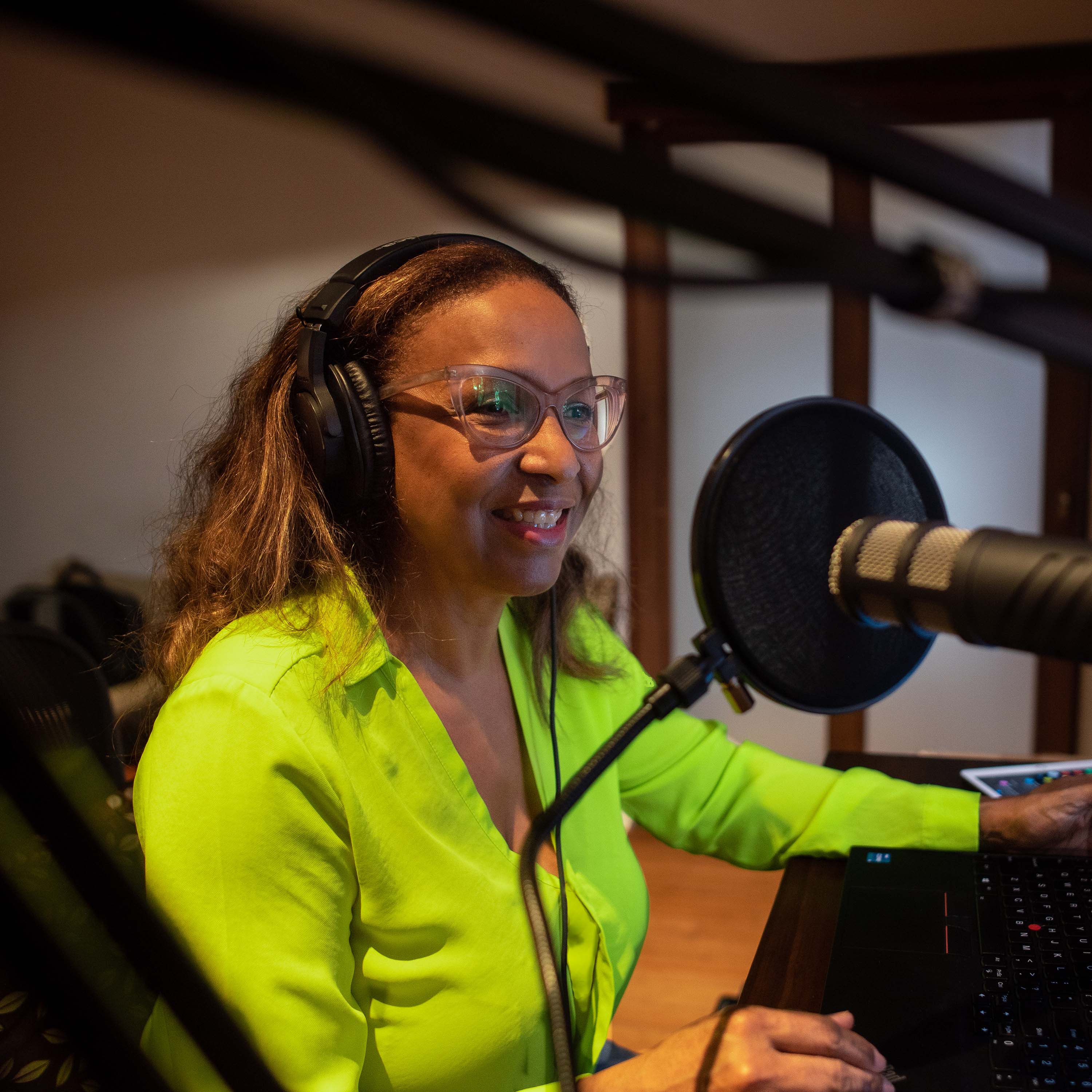
Leslie-Ann: Be bold. Take risks. Lead by example. Believe in your power. Say what you feel. Mean what you say? Hi, I'm Leslie-Ann Seon, host of the new podcast series, SEON180. Join me on Seon 180, on this journey of discovery and advancement.
Leslie-Ann: Hello again, and welcome to the SEON180 podcast. I'm your host Leslie- Ann Seon. Today we are broadcasting again from the luxurious, beautiful, Silver Sands Resort, on Grand Anse Beach, St. George's, Grenada. Our podcast series feature people of Caribbean origin or descent or connected to the Caribbean with an investment of any kind, from around the world, Caribbean folks making a real difference in whatever their sphere of influence. Our guests have been where you are. Their voices are meant to help inspire, inform, educate, and move you beyond your story. I invite you to check out my website at SEON180.com or visit your favorite podcast streaming sites for current episodes, as well as past shows. You can follow me on Facebook, or on our Instagram pages.
Leslie-Ann: On the last episode of SEON180, we were all captivated by our guest's personal story of trauma and triumph. We were left with the hope that regardless of our circumstances, anyone can start from today, to make a different life, and go beyond the story, beyond neutral. No one says it's easy, but it is possible, and SEON180 is here to tell that tale.
Leslie-Ann: Today on the show, I have the privilege and pleasure to speak with my friend, Dr. Paula Fakhre. An American turned Grenadian medical doctor, and a woman who is revolutionizing medical care in Grenada. Today, we are discussing the topic, The Face of Aesthetic Medicine. Paula was born and raised in Los Angeles and is married to a Grenadian. She is a mother of three, an outstanding medical practitioner, who received her medical degree from St. George's University, a Master's of Public Health, completed her postgraduate residency training in Family Medicine at the University of California. Studied tropical medicine in Cameroon in Africa, is licensed by the Medical Board of California, certified in aesthetic medicine and cosmetic dermatology, and is a member of the American Society of Laser Medicine and Surgery. Dr. Fakhre was trained directly with world-renowned Dermatologist, Dr. Sandra Lee, also known as Dr. Pimple Popper, and with Dr. Zein Obagi. Paula, thank you, and welcome to SEON180.
Paula Fakhre: Thank you so much, Leslie-Ann, for that wonderful introduction. I'm a big fan of the podcast and thank you for having me on the show today to discuss a topic I'm so passionate about.
Leslie-Ann: Good. I'm so happy to have you here. As we know, we have heard so much about aesthetic medicine, and all the taboos surrounding it, and everybody thinks it's just about botox and filler, but I've noticed, from my reading, that this is a booming discipline, that it actually does a lot of medical good for the physical appearance, and it's a lot more than the superficial stigma that's attached to it. So what is this aesthetic medicine?
Paula Fakhre: So, aesthetic medicine is a broad term that refers to procedures that primarily deal with addressing a person's cosmetic appearance. So right, so technically cosmetic surgery, plastic surgery, would fall under that, but the term has really evolved now to refer mainly to procedures that are minimally invasive, non-invasive, and non-surgical.
Leslie-Ann: Right, and I was reading that some of the areas that you touch on in aesthetic medicine relate to, like, hair transplantation, removal of keloids, right? Can you tell us about that. I wasn't aware of that at all.
Paula Fakhre: Right. So, hair transplantation is a little more invasive, it is a surgical procedure, but it can be done in the office under local anesthesia.
Leslie-Ann: Right.
Paula Kakhre: So that does kind of get into the realm more of surgical interventions, but keloid removal, yes, so that is something that especially in the region, in the Caribbean, it is a big problem for many people. A lot of people can get their keloid surgically removed, and they can grow back, they can grow back bigger. And, I'm pleased to say I'm actually the only practitioner in the entire Caribbean that does a revolutionary treatment called Cryo-Shape. So Cryo-Shape is a procedure that freezes keloids from the inside out, it's intralesional liquid nitrogen. So we, we freeze the keloid, it gets like a frostbite injury, then it falls off, and the recurrence rate of treating keloids in this manner is extremely low. So once they, once the keloid drops off, it rarely grows back. Whereas, with sort of a traditional surgical excision, if you cut the keloid off, it can grow back and sometimes bigger. So it's a great option for people who tried surgery and have failed and the keloid came back again. So I've had people from all over the Caribbean fly into Grenada to have this procedure done at DermaMed in Grenada and we've had really great success with that.
Leslie-Ann: That is excellent, because I know that it affects a certain ethnicity and certainly in the Caribbean.
Paula Fakhre: Right, definitely more prominent in dark-skinned individuals.
Leslie-Ann: Right.
Paula Fakhre: And keloids are definitely more, more common, and it is a problem in the region, and Grenada has been able to successfully treat people and help people regain their self-esteem, their confidence, because some of the keloids we've treated have been disfiguring, really large, and people have shied away from taking job opportunities, working in, taking a career where they might have to interact. So, it can be really inhibiting to somebody's daily life, and their quality of life.
Leslie-Ann: And I think that's what struck me when I started reading up about aesthetic medicine, because I think, like a lot of us, I sort of had, no aesthetic medicine. What is that about? You know, the Botox or fillers, whatever.
Paula Fakhre: Right, It's so much more than that.
Leslie-Ann: Yeah. And you're thinking it's just a superficial glossing of your parents. But really, when I started reading about the removal of keloids, and warts, and scar management, for instance.
Paula Fakhre: A lot of these things are medical diseases. Sure, there's a cosmetic component to it. But definitely, these are, these are also medical issues that we can address, that at the end of the day, may affect the way somebody looks cosmetically, but there is a medical necessity.
Leslie-Ann: A medical necessity. And I think it's also important when we talk about the world being so focused on the visual appearance, and people being so exposed to social media, for example, there is this need, you know, to always physically look good for the camera, for the image or the website, for whatever, and so it lends itself to that perception, but quite frankly, from what you're explaining, it's, it's a lot more than that. And even if it is about that, when you feel good, and look good, physically, isn't that good for your emotional well-being, and mental health?
Paula Fakhre: 100%, you're preaching to the choir, Ziggy.
Leslie-Ann: So it's more than just uplifting the physical appearance because that has a direct positive impact on how we feel mentally, and emotionally about ourselves, and gives us confidence.
Paula Fakhre: Absolutely. When we look in the mirror, and we like what we see, it gives us that internal confidence. It gives us that, that swagger, it gives that extra swing in your step, and you can take on the world, and yes, our physical appearance does matter. It's not a superficial thing, and if you don't like what you see, and you lack that confidence, and you have something that you're insecure about, that can have a tremendous negative impact on your life. For instance, I've had patients come into my office with spider veins, and we live in the Caribbean, on a beautiful island. I've had patients who haven't been to the beach in 20 years, because they don't want to expose their legs, and show their veins, and they haven't put a swimsuit on or shorts, and so this can really impact somebody's quality of life, and we can treat that, and it's just amazing to see somebody's confidence skyrocket after a treatment. And it's, it's so rewarding to be able to see somebody who comes in with acne or acne scars, and is really timid and shy, and after a series of treatments just walk away, you know, with a swagger.
Leslie-Ann: Yeah, almost dancing out.
Paula Fakhre: Right, exactly.
Leslie-Ann: I think that is so important. The overall, you know, being of the person, and I now understand why aesthetic medicine is integrated into all of this. So you talked about, you know, a lot of people come in from the Caribbean, to get the services that you offer at DermaMed. What's the typical profile of the patient? And the reason I'm asking is that, is this just the domain of the female, the vain female as we would say, or do we also cater to males?
Paula Fakhre: Of course not. I would say, I would say probably, most of, maybe 70% of our patients are female.
Leslie-Ann: Yeah.
Paula Fakhre: But we do have more and more men coming in, I would say, in the last year or so, you're having more and more men coming in for procedures, coming in for consultations to find out, you know, what, what they can do to address their acne scars, or hyperpigmentation, or dark marks or, or a very common problem, especially in black males, and what I see a lot in the Caribbean is Pseudofolliculitis Barbae, which are ingrown hairs in the beard, in the neck, that can be painful, they can get infected.
Leslie-Ann: Yeah.
Paula Fakhre: So we do laser treatments for that. So, more and more men are accessing these treatments, I would say, initially when we first opened, it was more women, but as we're spreading the message, as people come across our social media, they see oh, I have that problem. You know, maybe I can get, you know, help with this issue, or that issue. But you know, more and more men are coming in for aesthetic procedures, even Botox and fillers. So it is, it is growing in popularity with men as well. Its not just female….
Leslie-Ann: Yeah, it's not the female domain.
Paula Fakhre: Right?
Leslie-Ann: Well, that's good to hear, because it means, you know, people are understanding that this is all part of the self-care routine, whether male or female. Right? So tell me about your regional colleagues, what are they seeing about aesthetic medicine in the Caribbean? What are the trends? Are we beginning to accept it? Because you know, we're so closed-minded about certain things.
Paula Fakhre: No, definitely when I moved to Grenada seven years ago, I will say that there was a little bit of a lack of acceptance, a lack of knowledge, people didn't know what aesthetic medicine was, or what these treatments were. And I think they thought they were treatments that would make people look fake and artificial. But now, so I've done a lot to help educate and sensitize people to what aesthetic medicine is and how natural treatments can be. And I know my colleagues in the region have been doing the same. A good friend of mine, Dr. Rachel Eklund in Trinidad, has been a tremendous trailblazer in this industry and in the region, and has done a lot on her social media platform to show what aesthetic treatments look like. And what skincare and skin health is. My friend in Barbados, Dr. Crystal Haines, is also telling me that these treatments are on the uptrend, and that a lot more people are starting to get into this now.
Leslie-Ann: So it's a growing practice in the Caribbean then? It’s not really a novel area of medicine, like before?
Paula Fakhre: No, it is growing. It’s becoming, it's definitely increasing in popularity with both men and women. Even a colleague of mine in the Bahamas, Dr. Diedre Nelson-Sands, we all, all of us will communicate with each other and discuss what we're seeing on our respective islands, and as a whole, in the region, that cosmetic and aesthetic procedures are on the rise.
Leslie-Ann: So you're being able to collaborate, on your practice, the trends, and help educate. What I'm going to tell you is, the mischief-maker in me, while reading about aesthetic medicine, so reference to cosmetic gynecology, and I want you to explain to us, what does cosmetic gynecology means?
Paula Fakhre: Yes, right, so actually, now that you mentioned it, this is a treatment that we are going to be soon offering in Grenada, vaginal rejuvenation.
Leslie-Ann: Okay…
Paula Fakhre: I know in your previous season,...
Leslie-Ann: Yes, we talked about de-stigmatizing the word vagina.
Paula Fakhre: …With Dr. McIntosh…So, we can talk about the vagina comfortably now because this is really an issue that impacts a woman's well-being, and women's health, but a treatment that we're going to be offering soon is vaginal rejuvenation.
Leslie-Ann: What does that entail?
Paula Fakhre: So that entails a vaginal probe that uses radio-frequency to tighten the vaginal introitus. It's a skin tightening, it's a tightening procedure. There are different treatments for this. There's something called the O shot. Ww can use PRP to inject, which will help with sexual enhancements and sexual pleasure. The treatment that I'm going to be offering soon in Grenada is vaginal tightening, we use a radio-frequency probe, that will help with strengthening the pelvic floor muscles. It will help with a woman, who may have incontinence, and it also helps with sexual pleasure and satisfaction. So these are, you know, issues that may be taboo to talk about, but these are definitely important issues that impact a woman's well-being.
Leslie-Ann: I think it's important to discuss it because it really shows that there is a breadth and depth to aesthetic medicine, that the ordinary person wouldn’t necessarily associate with, right? And if I didn't do some reading, I certainly wouldn't find out that something like this is offered. You know, there is so much stigma or skepticism about Botox but we know that Botox helps to treat hyperhidrosis and even migraines. Is that right?
Paula Fakhre: Yeah, there are a variety of benefits to Botox other than just treating wrinkles. You know, I don't think there's anything wrong with just treating wrinkles with Botox, but yeah, we can treat hyperhidrosis, which is excessive sweating. Some people, I mean, it's hot and humid in the Caribbean, I think a lot of us are sweating, but there are people who, who really sweat excessively to the point where, you know, they drench their clothing on a daily basis and are really soaked in sweat. So we can do Botox treatments in their underarm area or their face or wherever they're excessively sweating. Botox can also be used for people who grind their teeth, that's called bruxism, and that can lead to TMJ. This is Temporomandibular Joint Disorders, and so we can add, we can inject botox in the masseter muscle along the jaw, and that can help tremendously with TMJ, to stop grinding teeth. Botox for headaches and migraines. So there are a variety of medical applications for Botox. It's not just all cosmetic. Again, not that there's anything wrong with just the cosmetic application of Botox, but definitely there are medical applications and medical benefits to Botox.
Leslie-Ann: That's interesting. You know that I'm hearing you speak about all these benefits, and I'm thinking that our audience, and the public out there really hasn't had the benefit of this kind of information in terms of how you can utilize it for good. So what do you think aesthetic medical practitioners need to do to pass the word on that this specialty in medicine is a lot more than about Botox and dermal fillers.
Paula Fahkre: What I've been doing, what other practitioners in this industry have been doing, is utilizing social media to really spread the word. So I'm posting all the time on social media platforms. I'm on Instagram, Facebook, TikTok, shameless plug, follow us on dermaMed_Grenada, on Tik tok DermaMed_Grenada, on Instagram. But yeah, Instagram has really been central and social media has been central in really getting the word out, because it's a visual platform, so you can actually see procedures being done. So we do a lot of videos. Now, you can see before and after treatments. You can see that it's not, you know, these treatments are not just for celebrities. You can see people who look like you and I, having treatments done, you can see what that treatment looks like and the after, the before and after photos. You can see that people look normal, they look natural. They don't look weird, or like aliens. So I think that's done so much to help spread awareness. But even so, with all the procedures that we offer, we have a huge menu of treatments. And when people go onto our website, it can be a lot. And like you said, there are so many things that we do in aesthetic medicine that, you know, you may not necessarily think of. Yeah, even our website can be overwhelming to some patients. They’re flipping through 30 pages of treatments. So we do a lot of treatments. And I think it's not just the Botox and Fillers. It's not just about that.
Leslie-Ann: It's a lot more than just the treatments that people think are not necessary.
Paula Fahkre: Right.
Leslie-Ann: So tell me something, Paula. How did you get into aesthetic medicine? You specialize in family medicine, you went to Cameroon in Africa, to study tropical medicine? How did you sort of evolve into aesthetic medicine? I think we want to know that story.
Paula Fahkre: So actually a mentor of mine, when I decided to fully transition into aesthetic medicine and kind of leave the GP medicine, the family medicine, I had a mentor basically tell me did you go to medical school, you know, to help people or to, you know, to do this? And I was a little kind of taken aback with the comment because I think what I do with anesthetic medicine does certainly help people. But yeah, I will say I fell into this kind of by accident. This was not what I envisioned myself doing by any means. I am from Los Angeles, and when I finished my residency training, I took a job in LA and a friend of mine basically was like, Hey, you're, you know, one of my good friends was like, “You're a doctor, can you get me some cheap Botox?” And she's like, what, you know, why am I paying so much money if you can, you know, why don't you go and get the training and you can do it on the side and do it for friends and family and give us a discount. And so it kind of started as a joke, really. So she was just, I had somebody, a friend of mine who just really encouraged me to go. We’ll just go take the class, go learn, go see, you know, so I did it. So I did. I took a class, begrudgingly, she actually enrolled me, she found all the details, she was so wanting to get a discount on Botox, that I learned how to do it. So I did. She literally found a course for me to take, and so I did the training. And I, you know, it started like that. So I started just offering Botox first, just to friends and family. And then I thought, you know, if I'm doing this for friends and family, I really need to know what I'm doing. I can't just, you know, do something on the side as a hobby, I have to go all-in, and really invest myself, so that I can do something properly. So I did and I took more training, more classes. I worked with really top plastic surgeons and dermatologists in Los Angeles, and it I just happened to be kind of in the mecca of plastic surgery and aesthetic medicine, which is, which is LA. So I had opportunities to work with some of the best of the best. And I was really eager to learn more, not so that I could switch careers. Not at all. I was still really dedicated to the family medicine, but, just because, if I was even going to do this on the side, part-time, I had to know. I wanted to know how to do the best I could.
Leslie-Ann: So what would you tell a young medical practitioner who might be thinking about embarking upon aesthetic medicine?
Paula Fahkre: Well, aesthetic, aesthetic medicine is here to stay. It's a booming industry. It’s growing globally, it's growing within the region. So there's definitely room for more practitioners in this field. You know, it really depends on what your passion is. If you are passionate about skincare, passionate about this industry, then I would say to go for it.
Leslie-Ann: Yeah, because we do have a population that needs the treatments, and as you've said, the benefits are far-reaching and lasting, and that's what we want.
Paula Fahkre: Yes.
Leslie-Ann: Okay. So, as we're closing off this chat, Paula, tell us a little bit before we take away your clear message today that this is about self-care, the positive impact that it's had on the patients that you've seen sort of busting the myths and the taboos about aesthetic medicine. What, in your experience, you can sort of leave with us as a parting message?
Paula Fahkre: These treatments are absolutely about self-care, and your overall well-being. I've had patients come in from all walks of life. This isn't just for a certain class of patient or plummeting from a certain socio-economic status. I've had patients from all walks of life come in, and it was important to me at DermaMed, to have treatments at different price points that everybody could access, so that it's accessible to everybody. But I've had, you know, I have had patients come in and save their money to do a certain procedure that they really wanted done, and walk out feeling like a million bucks. But these treatments can do a lot to help somebody’s self-esteem, to help somebody get over something that they're very insecure about, and…
Leslie-Ann: Give them confidence.
Paula Fahkre: Give them confidence… you know, the confidence that can be attained by, you know, fixing a singular problem or addressing a few issues that really can bog you down mentally, to the point where you feel like you don't want to socialize, or go out or take a job in the public sector because…
Leslie-Ann: Or take a swim in the beach.
Paula Fahkre: Take a swim at the beach. And, and we can help address all of these areas of concern to give somebody back their confidence or to have somebody find, you know, a newfound confidence. So…
Leslies-Ann: Moving beyond their story.
Paula Fahkre: Absolutely.
Leslie-Ann: You know, we're looking for moving beyond the story, moving beyond neutral, and being able to embrace the future with confidence.
Paula Fahkre: Exactly.
Leslie-Ann: Thank you so much P, I enjoyed chatting with you about this very provocative topic.
Paula Fahkre: Thank you so much for having me on.
Leslie-Ann: Not at all. We look forward to the feedback that we'll be getting from our audience. So, I want to thank Dr. Paula Fahkre, for sharing with us the importance of self-care and showing us at the end of the day, that aesthetic medicine is just another area of self-care, to look and feel our best. It goes beyond the physical appearance. It speaks to the emotional, and mental health and well-being of ourselves. When we believe we look better, we feel better, we perform and live better. Thank you for clarifying the misconceptions about aesthetic medicine and for introducing us to the wide variety of treatments that aesthetic medicine offers. And it's available right here in Grenada and the Caribbean.
Thanks to our sponsors, Century21 Real Estate, for joining us on The SEON180 podcast journey and to the lovely Silver Sands Resort, here on Grand Anse Beach, for donating the gorgeous resort surroundings to host this podcast. Thank you and be safe everybody.